
AJA ROMANO claims to have been a Harry Potter superfan for yonks! So much so that the BBC has invited her to present a 30-minute Radio 4 documentary called: ‘Can I still read Harry Potter?’Alas, in June this year J.K. Rowling ventured her views on the trans issue resulting in Romano rethinking a treasured childhood allegiance. On Thursday Radio 4 at 11.30am addresses questions about cancel culture, safe spaces, the appeal of Potter for LGBTQ readers and the new online relationship between authors and fans. Meanwhile, the Financial Times critic reports that Rowling has suffered a increase in sales since furore about her comments began. ***********************************************************
Showing posts with label radio 4. Show all posts
Showing posts with label radio 4. Show all posts
Saturday, 7 November 2020
Aja Romano asks ‘Can I still read Harry Potter?’


Friday, 24 January 2020
British US Relations & Immunity from Prosecution
IT was reported today that the United States has turned down an extradition request for Anne Sacoolas, the wife of a US intelligence officer, who is to be charged with causing the
death of teenage motorcyclist Harry Dunn. Mr Dunn, aged 19, died after a
crash in Northamptonshire in August which led to the suspect Anne
Sacoolas, the wife of a US intelligence officer, leaving for the US
under diplomatic immunity.
A Dunn family spokesman Radd Seiger said they had taken the news of the US decision "in our stride".
Extradition proceedings had been launched earlier this month.
Speaking to BBC Radio 4's Today programme, Mr Seiger said the latest move had been "factored it into our planning and strategy".
"The reality is that this administration, which we say is behaving lawlessly and taking a wrecking ball to one of the greatest alliances in the world, they won't be around forever whereas that extradition request will be," he added.
"We will simply plot and plan for a reasonable administration to come in one day and to reverse this decision."
The Home Office said the decision appeared "to be a denial of justice".
In December 1943, George Orwell wrote an 'As I Please' essay in which he observed: "...it is difficult to go anywhere in London without having the feeling that Britain is now Occupied Territory.'
Orwell continued: "Before the war there was no popular anti-American feeling in this country. It all dates back from the arrival of the American troops, and it is made vastly worse by the tacit agreement never to discuss it in print... As a result things have happened which are capable of causing the worst kind of trouble sooner or later."
And he adds: "An example is the agreement by which American troops are not liable to British courts for offences against British subjects - practically 'extra-territorial rights'.'
In these circumstances, the current decision to block the Anne Sacoolas extradition request by the US would merely seem to be business as usual.
Extradition proceedings had been launched earlier this month.
Speaking to BBC Radio 4's Today programme, Mr Seiger said the latest move had been "factored it into our planning and strategy".
"The reality is that this administration, which we say is behaving lawlessly and taking a wrecking ball to one of the greatest alliances in the world, they won't be around forever whereas that extradition request will be," he added.
"We will simply plot and plan for a reasonable administration to come in one day and to reverse this decision."
"A denial of justice"
The Home Office said the decision appeared "to be a denial of justice".
In December 1943, George Orwell wrote an 'As I Please' essay in which he observed: "...it is difficult to go anywhere in London without having the feeling that Britain is now Occupied Territory.'
Orwell continued: "Before the war there was no popular anti-American feeling in this country. It all dates back from the arrival of the American troops, and it is made vastly worse by the tacit agreement never to discuss it in print... As a result things have happened which are capable of causing the worst kind of trouble sooner or later."
And he adds: "An example is the agreement by which American troops are not liable to British courts for offences against British subjects - practically 'extra-territorial rights'.'
In these circumstances, the current decision to block the Anne Sacoolas extradition request by the US would merely seem to be business as usual.
*********************
Wednesday, 15 January 2020
DOPE: An Anarchist 'Big Issue'?
by Brian Bamford
ON 'START the WEEK', on Radio 4 this week, Tom Sutcliffe discussed a world without work with Daniel Susskind, Suzi Gage, Anoosh Chakelian and Sir John Strang.
Journalist Anoosh Chakelian of the New Statesman, had gone behind the scenes at a new magazines set
up to rival the Big Issue, as she explored Britain's homelessness
crisis.
The journal called DOPE is run voluntarily as a radical publishing 'affinity group', and all the money they make from sales and subscriptions goes back into the cooperative’s efforts, in particular printing more solidarity copies of the DOPE Magazine for street-vendors.
Following the pattern of The Big Issue, these new journals enable rough sleepers to earn money rather than beg, and creates respectable employment opportunities. But also Chakelian troubled about the way in which a country with growing numbers of homeless people is now evolving these industries based upon their suffering.
On a daily basis the homeless vendors turn up keen to sell for more copies, to the point where affinity group has had to limit the number they give to individuals to ensure there are enough to share around. Starting out printing 1000 copies per issue back in 2016, the last issue (Autumn 2019) went up to 5000 copies. Next they want to print 10,000.
The Whitechapel premises has in the past been describe as 'an anarchist hangout', and it has long been used as a premise for all sorts of odds and sods to shack-up. Historically it was the base of British anarchism in times when it was run by traditional anarchists to publish Freedom, perhaps one of the oldest anarchist publications in the world, which was first established in 1884.
DOPE is funded by people buying a copy online, or taking out a subscription, or supporting them on Patreon. It is a direct way of contributing to autonomous and political support of homeless and imprisoned people.
The affinity group claim:
'We’ve reached the point in the economies of scale now where it only costs £75 to print an extra 1000 copies. The cover price is £3, so that equates to £3000 to the people selling it on the street. To us that seems like a pretty good (and cheap!) win-win – anarchist propaganda in the hands of people who might not otherwise have read it, and money in the pocket of people who need it most.'
In 1987, in the town of La Línea de la Concepción at the anarchist branch of the CNT trade union in the Bay of Gibraltar in Andalucia, Spain, a similar attempt was made to help the locals find homes, as I recall the venture was egged-on by the La Línea Social Democratic Party [PSOE]; it turned out to be a bit of a con and the local CNT suffered in consequence.
The new publication, DOPE Magazine is a quarterly newspaper called, is produced by an anarchist publisher called Dog Section Press in London since spring 2018, and is now being sold by homeless people in cities around the country, from Bristol to Edinburgh.
The journal called DOPE is run voluntarily as a radical publishing 'affinity group', and all the money they make from sales and subscriptions goes back into the cooperative’s efforts, in particular printing more solidarity copies of the DOPE Magazine for street-vendors.
Following the pattern of The Big Issue, these new journals enable rough sleepers to earn money rather than beg, and creates respectable employment opportunities. But also Chakelian troubled about the way in which a country with growing numbers of homeless people is now evolving these industries based upon their suffering.
On a daily basis the homeless vendors turn up keen to sell for more copies, to the point where affinity group has had to limit the number they give to individuals to ensure there are enough to share around. Starting out printing 1000 copies per issue back in 2016, the last issue (Autumn 2019) went up to 5000 copies. Next they want to print 10,000.
The Whitechapel premises has in the past been describe as 'an anarchist hangout', and it has long been used as a premise for all sorts of odds and sods to shack-up. Historically it was the base of British anarchism in times when it was run by traditional anarchists to publish Freedom, perhaps one of the oldest anarchist publications in the world, which was first established in 1884.
DOPE is funded by people buying a copy online, or taking out a subscription, or supporting them on Patreon. It is a direct way of contributing to autonomous and political support of homeless and imprisoned people.
The affinity group claim:
'We’ve reached the point in the economies of scale now where it only costs £75 to print an extra 1000 copies. The cover price is £3, so that equates to £3000 to the people selling it on the street. To us that seems like a pretty good (and cheap!) win-win – anarchist propaganda in the hands of people who might not otherwise have read it, and money in the pocket of people who need it most.'
In 1987, in the town of La Línea de la Concepción at the anarchist branch of the CNT trade union in the Bay of Gibraltar in Andalucia, Spain, a similar attempt was made to help the locals find homes, as I recall the venture was egged-on by the La Línea Social Democratic Party [PSOE]; it turned out to be a bit of a con and the local CNT suffered in consequence.
The new publication, DOPE Magazine is a quarterly newspaper called, is produced by an anarchist publisher called Dog Section Press in London since spring 2018, and is now being sold by homeless people in cities around the country, from Bristol to Edinburgh.
Stylishly designed with edgy cover illustrations, its
contributors include the poet Benjamin Zephaniah, musicians Sleaford
Mods and Drillminister, and artists Laura Grace Ford, Cat Sims and
Liv Wynter. It already has a circulation of over 5,000.
DOPE is not the only new publication to rival the Big Issue. Another non-profit underground paper called Nervemeter started up in 2011 under the coalition government, for 'people who may have found that their benefits have been cut: they are skint, they may be sick, they desperately need to make some cash', according to the introduction of its first issue.
Still running, this is a bit different because the vendors ask for donations from recipients for the magazine, with a suggestion of £3 minimum. Yet part of its appeal is also as a Big Issue alternative. 'Nervemeter is not a registered charity,' reads its website. 'We don’t trust registered charities and you shouldn’t either. We are a charitable organisation and are 100 per cent transparent, which means every penny you give us goes on printing and nothing else.'
There have always been grassroots responses to homelessness, but trends like this reflect its scale in the country. The latest count for the whole of England, in January last year, showed a 165 per cent increase in rough sleeping overall since 2010.
DOPE is not the only new publication to rival the Big Issue. Another non-profit underground paper called Nervemeter started up in 2011 under the coalition government, for 'people who may have found that their benefits have been cut: they are skint, they may be sick, they desperately need to make some cash', according to the introduction of its first issue.
Still running, this is a bit different because the vendors ask for donations from recipients for the magazine, with a suggestion of £3 minimum. Yet part of its appeal is also as a Big Issue alternative. 'Nervemeter is not a registered charity,' reads its website. 'We don’t trust registered charities and you shouldn’t either. We are a charitable organisation and are 100 per cent transparent, which means every penny you give us goes on printing and nothing else.'
There have always been grassroots responses to homelessness, but trends like this reflect its scale in the country. The latest count for the whole of England, in January last year, showed a 165 per cent increase in rough sleeping overall since 2010.
*****************
Monday, 13 January 2020
Heritage Sector & Bigots!
BLANCMANGE or NEUTRALITY in the Heritage Sector?
NEXT Friday, the 17th, January 2020, Tristram Hunt, the director of the Victoria & Albert Museum in London, will begin a series of talks on Radio 4 about Museums in the 21st Century and their relevance. In the blurb the BBC announces this forthcoming event thus:
'Museums have never been more popular around the world or faced such
sustained criticism. While the Louvre enjoys record-breaking visitor
numbers, Abu Dhabi's Saadiyat Island builds a new museum campus for the
Middle East and blockbusters from Leonardo to Van Gogh to David Bowie
circle the globe, museums are also under challenge. Critics questions
historic claims to neutrality, call for the repatriation of colonial-era
artefacts and protest over the origins of sponsors' money.'
In May 2018, the director of the Victoria & Albert Museum, Tristram Hunt, had caused a bit of a stir when he announced: ‘I see the role of the museum not as a political force but as a civic exchange.’ Adding that he ‘was not so sure [that museums] have a duty to be vehicles for social justice’.
On July 5th, 2019, in an article on the Red Pepper website Siobhan McGuirk wrote a passionate piece entitled 'Museums are socially vital precisely because of their political nature' in which it was declared:
"We are in the midst of a momentous self-regarding
public debate over what it means to be British. From the shadows of
referendum campaigning until now, misrepresentations, half-truths and
outright lies have proliferated, recasting the past to demonise the
other. The phrase ‘fake news’ has been co-opted to the point of
meaninglessness, while flagship media outlets grant platforms to bigots,
justified as promoting ‘neutrality’ – as if facts were up for debate,
or ‘civic exchange’."
Indeed, Red Pepper's mention of 'flagship media outlets grant platforms to bigots', naturally reminds one of an incident in April 2010 in which the Rochdalian lass,Gillian Duffy, 65, heckled the prime minister [Gordon Brown} as he was interviewed
live on TV in Rochdale. Brown initially ignored her but was then asked
by senior aides in his entourage to meet her.
Later the Prime Minister was then famously caught on tape as, unknown to him, the microphone was still turned on:
Brown: 'That was a disaster. Well I just ... should never have put me in with that woman. Whose idea was that?'
Aide: 'I don't know, I didn't see.....'
Aide: 'What did she say?'
Brown: 'Oh everything, she was just a sort of bigoted woman. She said she used be Labour. I mean it's just ridiculous.
'Just a sort of bigoted women'. Which is precisely the attitude someone on the self righteous left of politics would take, is it not?
Brown then followed with more painfully patronising talk from:
Brown: 'Very good to meet you, and you're wearing the right colour today. Ha, ha, ha: How many grandchildren do you have?'
Duffy: 'Two. They've just got back from Australia where they got stuck for 10 days. They couldn't get back with this ash crisis.'
Brown: 'We've been trying to get people back quickly. Are they going to university. Is that the plan?
Duffy: 'I hope so. They're only 12 and 10.'
Brown: 'Are they're doing well at school? [pats Duffy on the back] A good family, good to see you. It's very nice to see you.'
How pompous and smarmy can you get? And is it any wonder that Labour is failing to gel with the northern working class?
Red Pepper itself has previously distinguished itself by finding space to argue the case for 'no platforming' people they don't like or people they may regard as being 'bigots'. .
For more on Museums go to:
Later the Prime Minister was then famously caught on tape as, unknown to him, the microphone was still turned on:
Brown: 'That was a disaster. Well I just ... should never have put me in with that woman. Whose idea was that?'
Aide: 'I don't know, I didn't see.....'
Aide: 'What did she say?'
Brown: 'Oh everything, she was just a sort of bigoted woman. She said she used be Labour. I mean it's just ridiculous.
'Just a sort of bigoted women'. Which is precisely the attitude someone on the self righteous left of politics would take, is it not?
Brown then followed with more painfully patronising talk from:
Brown: 'Very good to meet you, and you're wearing the right colour today. Ha, ha, ha: How many grandchildren do you have?'
Duffy: 'Two. They've just got back from Australia where they got stuck for 10 days. They couldn't get back with this ash crisis.'
Brown: 'We've been trying to get people back quickly. Are they going to university. Is that the plan?
Duffy: 'I hope so. They're only 12 and 10.'
Brown: 'Are they're doing well at school? [pats Duffy on the back] A good family, good to see you. It's very nice to see you.'
How pompous and smarmy can you get? And is it any wonder that Labour is failing to gel with the northern working class?
Red Pepper itself has previously distinguished itself by finding space to argue the case for 'no platforming' people they don't like or people they may regard as being 'bigots'. .
For more on Museums go to:
****************
Friday, 31 August 2018
Whose Afraid of Jonathan Sacks?
by
Les May
CARVED
into the wall at Broadcasting House are the words of George Orwell,
‘If liberty
means anything at all it means the right to tell people what they so
not want to hear’,
which
makes the juxtaposition
of articles in the most recent copy of the Radio
Times
all
the more interesting.
The
‘Pick of the
week’
on Radio 4 is ‘Morality
in the 21st
Century’
presented by ex-Chief Rabbi Jonathan Sacks. We are told that his aim
is to ‘provoke
thought and discussion never to proselytise or preach’
and
that ‘Morality
is what lifts us above the pursuit of self interest and self esteem’.
And
in case you are wondering, yes that’s the same Jonathan Sacks who
are few days ago was denouncing Jeremy Corbyn as an antisemite and a
racist because he did not like what Corbyn had said. Or more
correctly he did not like his
interpretation of what Corbyn had said. This
in turn became his justification for his absurd comparison of
Corbyn words
with
Enoch Powell’s
speech.
The
other article is by the
BBC’s world affairs editor John
Simpson. In it he comments ‘People
have allowed themselves to be persuaded that there’s something
wrong with being given open and unbiased information from BBC
journalists’.
I think that Simpson is over egging the pudding a bit here because
all media outlets select what is ‘news’,
who
they are going to quote or interview, and how much space or air time
they are to be given, so reports are never going to be quite so
unbiased as he suggests.
But
that does not mean it is not worth making the effort. He
goes on to say ‘Well,
I’m sorry, but I don’t think any subject is too important to keep
our minds closed to it’.
I
agree and
the fact that someone might be ‘offended’
by
some subjects
cuts no ice
with me.
You
are never going to change anyone’s mind unless you can talk to
them.
Simon
Kelner, who writes ‘think
pieces’
for the ‘i’
newspaper, i.e. he’s a columnist not a journalist in the mould of
Simpson, wrote last week that Sack’s used his Instagram account to
tell the world that he was ‘a
religious leader, philosopher, award-winning author and a respected
moral voice’.
Clearly
Sack’s
is
not a man over endowed with
modesty
or self doubt.
Kelner
says that he is ‘definably,
a Zionist’,
which suggests to me that he, Kelner, has not actually spent much
time trying to figure out
what a Zionist is. Seeking
enlightenment I found that the explanation on Wikipedia runs to some
11,000 words which
is 28
A4 pages. Here
is the link, I’ll let you figure it out for yourself.
In
a remarkable bit of inventiveness Kelner writes, ‘Not
all Jews are Zionists, but (mostly) all Zionists are Jews, and I, as
a liberal-minded British Jew (rather than a Zionist) am offended by
Mr Corbyn’s pronouncements’.
The flaw in this bit of twisted logic is that one chooses to be a
Zionist, you are born a Jew. To my mind that means that you can
criticise a Jew for being a Zionist, but not for being a Jew. (I
would add
that
I feel uncomfortable using Kelner’s form of wording because in my
own speech I prefer to say someone is ‘a
Jewish person’
rather than ‘a
Jew’,
and ‘Jewish
people’
rather than ‘the
Jews’).
As
for Kelner’s complaint that he is ‘offended’
by what Corbyn said, all I can say is ‘So
what’?
Since when did Kelner, or indeed anyone else, have a right never to
be offended?
No
one seems to be too concerned about not offending me in matters just
as close to my heart as Sack’s and Kelner’s hobby horse.
(Andrea
Dworkin was once quoted in the The
Observer
as saying ‘All
men are Nazis’.
After it was published there was no rush to defend men or censure
Dworkin, so I am unlikely to feel I have to avoid making comparisons
between some of Israel’s policies towards the Palestinians and the
behaviour of the Nazis.)
One
of the curious things about the claims that Corbyn is presiding over
a Labour party
riddled
with antisemitism is that I have not yet met anyone who has actually
witnessed it. And it’s not just my Labour friends who say this. A
friend who never misses an opportunity to denigrate Labour has made
exactly the same point on
more than one occasion.
Nor is antisemitic crime running riot in this country. About 15,000
prosecutions for ‘hate
crime’
are launched annually. Annual
prosecutions
for anti-semitism have yet to top two dozen. In
spite of Margaret Hodge’s silly
musings
no one is
being threatened by a new Holocaust.
So
I think we can reasonably ask who is behind the repeated complaints
against Corbyn. On the photographic evidence published in the
newspapers there seem to be two culprits, the
Jewish Chronicle and the Campaign Against Antisemitism.
We
also know from the films on the Al Jazeera TV channel which were
shown in 2017 that the state of Israel has been interfering in UK
politics and has tried to destabilise the Labour party.
Why?
That’s easy. Corbyn is unashamedly on the side of the
Palestinians. It
is to discredit any charges he
makes against the state of Israel by
claiming that
he
is an anti-Semite. It's to turn Jewish
people into victims, and by implication, Israel into a nation of
victims.
It's no longer Israel that needs to leave the Occupied Territories;
it's Corbyn
and the rest of us
who need to free ourselves
of antisemitism.
I’m
sure Corbyn has plenty of advisers and does not need my advice, but
I’m going to give it all the same. Fight these people on the basis
of freedom of speech. Put
them on the defensive for a change.
Remind
people
what Orwell said. Remind
them that the
first thing the Nazis did was to suppress dissent, so remind people
about how many British lives were lost in defence of that
liberty.
************
Saturday, 24 March 2018
Police admit role in construction blacklist scandal
sent by Trevor Hoyle (Rochdale)
THE
Metropolitan Police has confirmed undercover Special Branch officers
supplied information to the construction industry blacklist.
Blacklisted workers have fought tirelessly to expose wrongdoing photo
The admission follows a campaign by blacklisted workers to prove they were spied on by the police.
It comes in a letter sent by Deputy Assistant Commissioner, Richard Martin in response to a complaint made by the Blacklist Support Group to the Independent Police Complaints Commission.
The letter states: “Allegation: Police, including Special Branches, supplied information that appeared on the Blacklist, funded by the country’s major construction firms, The Consulting Association and/or other agencies, in breach of the Data Protection Act 1998.
“The Report concludes that, on the balance of probabilities, the allegation that the police or Special Branches supplied information is ‘Proven’.
The letter goes on to explain: “Sections of the policing community throughout the UK had both overt and covert contact with external organization, including the Economic League”
It also conformed an “improper flow of information from Special Branch to external organisations, which ultimately appeared on the Blacklist”.
The blacklist scandal has seen more than £75m in compensation paid to workers by major contractors.
Allegations of police collusion in blacklisting were first made back in 2012 but the claims were strenuously denied by the authorities.
MP John McDonnell said: “It is now abundantly clear that various arms of the state including the Police colluded in the blacklisting process.
“This is one of the hidden scandals of the abuse of civil liberties in our country that needs to be recognised fully and addressed. The people involved need to be brought to book.”
Dave Smith, secretary of the Blacklist Support Group said: “When we first talked about police collusion in blacklisting, people thought we were conspiracy theorists.
“We were told, ‘things like that don’t happen here’. With this admission from the Met Police, our quest for the truth has been vindicated.”
“The police are supposed to detect crime, instead they infiltrated trade unions and provided intelligence to an unlawful corporate conspiracy.”
Unite assistant general secretary Gail Cartmail, said: “This is a major breakthrough the police have finally been forced to admit what we already knew that they were knowingly and actively involved in the blacklisting of construction workers.”
http://www.constructionenquirer.com/2018/03/23/police-admit-role-in-construction-blacklist-scandal/
Dave Smith, the excellent representative for his union members, was interviewed (fairly) by Sarah Montague on Radio 4 this morning. I will put the link up later.
******
Friday, 16 March 2018
Protesting the Chop & Sheffield's Trees
Labour Council outsources tree felling to Amey / Ferrovial*
The outsource companies currently contracted to Sheffield City Council include:
- Amey manage the city's 'Streets Ahead' project including management of highways.
- Kier Sheffield maintains and repairs the social housing stock.**
- Veolia manages household waste disposal.
- Capita provides HR, payroll and IT services for council employees. ***
* Amey, is a subsidiary of the massive Spanish company grupo Ferrovial
** Kier is one of the seven companies that in 2015 admitted to blacklisting building workers.
*** Capita has been compared to Carillion, and its share price has plunged from around £11 to £2 in just two years and it dropped out of the FTSE 100 last March.
******
OVER 5,000 trees have been cut down in Sheffield since 2012, as part the city council's £2bn Streets Ahead project with the excuse of improving roads and footpaths in the city.
The council, which is planting sapling trees after removing existing mature ones, insists the trees earmarked for felling are either 'dangerous, dead, diseased, dying, damaging or discriminatory'.
Yet it seems many of the trees condemned by the council as 'damaging' or 'discriminatory' are healthy specimens which campaigners say should be saved. They say that alterations should be made to surrounding pavements and roads instead.
Today an event 'Get Off Our Tree!' is being held at Sheffield City Hall. Also playing are local artists The Everly Pregnant Brothers, lead singer of Reverend and the Makers, Jon McClure, and former Pulp drummer Nick Banks and the Compare is Jason Cocker , who was interviewed on Radio Four's 'Today' program.
These are just some of Sheffield’s tree protesters, members of local groups coordinated by the Sheffield Tree Action Groups (Stag), which are claiming that this is another example of local government gone wrong. Stag have made it their mission to protect the trees from council-backed felling crews in what is often hailed, with more than a pinch of Yorkshire hyperbole, as Europe’s greenest city.
Labour Council's PFI Contract
The fellings are part of a 25-year, £2.2bn Private Finance Initiative (PFI) contract. Signed in 2012 between the Labour-led council and a private company, Amey, the Streets Ahead programme is intended to upgrade 'the condition of our city’s roads, pavements, streetlights, bridges …' – no small feat in a place that was known as 'pothole city'.
The contract has serious implications for the city’s 36,000 roadside trees, which have in effect been privatised until the late 2030s. Amey, a subsidiary of the massive Spanish company Ferrovial, has so far removed around 5,350, including oaks, elms and limes. Alison Teal, a local Green party councillor, believes she knows why many were chosen: 'I can only assume that because it’s a 25-year contract, they’re felling mature trees because they are more expensive. They cause pavement and road disruption and a hell of a lot of leaves fall off them.'
Loose and wonky kerbstones and cracked pavements owing to tree roots are among the reasons given for the fellings. But there is a belief among the Sheffield protesters that the 14 alternatives priced into Amey’s contract – from flexible paving to root pruning and pollarding – are being underused.
The council says it only resorts to removing trees if they are 'dangerous, dying, diseased, dead, damaging or discriminatory' (meaning that they damage pavements and potentially obstruct disabled residents). Of the eight mature limes destroyed on Rustlings Road, however, the council’s own independent tree panel found that seven were in good condition with a good life expectancy.
The heavy redaction of the contract between Amey and Sheffield council doesn’t help clarify things. With many details kept from the public in the name of 'commercial confidentiality', there is no way of verifying, for instance, the council’s warnings of “catastrophic financial consequences” if the fellings are delayed. The gaps leave room for conjecture about why the PFI deal isn’t being called off, or its terms renegotiated. Protesters think they have found legal reasons that would allow the council to annul the contract – a recent petition focuses on Amey’s alleged failure to disclose a 2011 health and safety conviction following the death of an employee. A council spokesperson said it was aware of the death before the contract was awarded, but it failed to provide written evidence of that knowledge in response to Freedom of Information requests made by campaigners.
Thatcherite Law Used by Labour Council
Many cite “the battle for Rustlings Road” as a turning point – following a pre-dawn raid and scenes that the former local MP Nick Clegg described as “something you’d expect in Putin’s Russia”, pensioners were arrested for peacefully protesting. Eight trees were chopped down.
It has been a long and gnarly road to today’s situation, with frustrations running high. In 2016, arrests of peaceful protesters started under the 1992 Trade Union and Labour Relations Act, which criminalises anyone who persistently stops someone from carrying out lawful work – in this case, tree surgeons contracted by Amey.
'We have the harsh irony of Thatcherite anti-union law being used by a Labour council against its own citizens,' says Ian Rotherham, professor of environmental geography at Sheffield Hallam university. 'Only about 30 years on from Orgreave, our local councillors seem to not see the bitter twist in all this.'
We have the harsh
irony of Thatcherite anti-union law being used by a Labour council
against its own citizens.
Labour's 'One Party State' !
In Ms. Teal’s opinion of local democracy is low – and no wonder, after a year in which the council on which she sits took her to court for breaking the injunction, only for the case to be thrown out. 'This is a one-party state,' she says. 'Sheffield has 84 councillors; 56 are Labour. They can’t be outvoted.' She mentions Nasima Akther, a Labour councillor who defied the whip to abstain on a vote about the fellings. 'For her courage she was suspended from the party. It’s bullying and she subsequently resigned.'
******
Tuesday, 1 August 2017
Richard Dawkins & 'Gut Methodology'
LAST week, Professor Richard Dawkins, formerly the University of Oxford's Professor for Public Understanding of Science, argued on
Radio Four's Today program that humans should apply rational thought when trying to solve the
world's problems to which the Archbishop of Canterbury Justin Welby responded on
Monday that acting out of love and through emotion is an important part of what
makes us humans.
Speaking on the on the TODAY program last week, Dawkins had said people should avoid voting with their gut and adopt a more scientific approach. 'Of course, we all think with our gut a lot of the time. But when we’re making important decisions, like when we’re voting [or] when we’re taking important business decisions, don’t think with your gut, think rationally. Look for the evidence one way or the other; weigh it up.'
Dawkins said the scientific method should be applied beyond the lab, adding that 'evidence is the only reason to believe anything about the real world'.
However, responding to the good Professor Dawkins, the Archbishop of Canterbury, JustinWelby has said that the scientific method alone could not answer all of the big questions:
'The world is not entirely materialism. It’s not entirely made up of what you can experiment with. There are things we deal with every day – emotions around love, around the value of people, around how we treat those who are weaker and stronger – where mere rationality, even evidence-based rationality, which I hold to as a really important thing, does not answer the whole question adequately.'
The archbishop of Canterbury has spoken of his deep sympathy for the family of Charlie Gard,
the 11-month-old boy who died last week after a long legal battle, as
well as the medics who treated him and the judges who presided over his
case.
Justin Welby evoked the memory of his own daughter, Johanna, who died when she was less than a year old as he said the world could not be explained by rationality alone.
Welby was commenting on Prof Richard Dawkins' insistence last week on the primacy of evidence and reason, not emotion, when making big decisions.
'It’s quite well known that one of our own children died and we had to stand by the bed and they died when the life support was withdrawn. And I think that, in a case like that, I’m not going to say anything except that my heart breaks for the parents,' Welby told BBC Radio 4’s Today programme on Monday.
While he said evidence-based decision-making was important to him, he cited the Gard case as an example of where it could only be a part of the right approach.
Speaking on the same programme last week, Dawkins said people should avoid voting with their gut and adopt a more scientific approach. 'Of course, we all think with our gut a lot of the time. But when we’re making important decisions, like when we’re voting [or] when we’re taking important business decisions, don’t think with your gut, think rationally. Look for the evidence one way or the other; weigh it up.'
Dawkins said the scientific method should be applied beyond the lab, adding that 'evidence is the only reason to believe anything about the real world'.
However, Welby has said it alone could not answer all of the big questions.
'The world is not entirely materialism. It’s not entirely made up of what you can experiment with. There are things we deal with every day – emotions around love, around the value of people, around how we treat those who are weaker and stronger – where mere rationality, even evidence-based rationality, which I hold to as a really important thing, does not answer the whole question adequately.'
Referring to the Gard case, which was at the centre of a long-running legal battle over the child’s care, Welby said any parent would 'fight for the life of their child as long as they could', adding: 'We know what that’s like.'
The judges and doctors who were treating Charlie at Great Ormond Street hospital came in for abuse as the case progressed through the courts, but the archbishop said that each person involved was worthy of sympathy because they wanted the best for Charlie.
'I’m sure they cared to the depth of their being about doing the right thing and it’s a very good example of where sometimes rational, evidence-based thinking is not the whole story. The medics weren’t operating on that. They grieve when they lose a patient and particularly a child.
'I just feel deeply sorrowed by the whole thing and feel deeply, deeply, deeply for Charlie Gard’s parents and for all the rest of the people involved in the most tragic case. Sometimes, we want to come to clean, quick conclusions and it’s right just to pause and grieve.'
It must be extremely irritating for a passionate rationalist Professor like Professor Dawkins to cope with current political developments and the nature of human behaviour as it is being played out in the real world. The scientific method of decision making is clearly not uppermost in most people's minds.
In a study published today on the 2017 General election by
'Despite Mrs May's claim that her reason for calling an early election was to get a mandate for the Brexit negotiations, the issue of Brexit itself had a relatively low profile during campaigning.
For much of the campaign, both the Conservatives and Labour focused on other issues.
But in the minds of the voters at least, the 2017 election was - as it promised to be ever since the referendum of June 2016 - the Brexit election'
The report says 'in the minds of the voters' but in the answer to the question: 'As far as you're concerned, what is the single most important issue facing the country at the present time?'
This research shows that more than one in three people chose Brexit or the EU, compared with fewer than one in 10 who mentioned the NHS or one in 20 who suggested the economy.
It would seem that the driving force here as so often elsewhere in political decision-making is gut reactions rather than the ponderings of the scientific method as recommended by Prof. Dawkins.
Speaking on the on the TODAY program last week, Dawkins had said people should avoid voting with their gut and adopt a more scientific approach. 'Of course, we all think with our gut a lot of the time. But when we’re making important decisions, like when we’re voting [or] when we’re taking important business decisions, don’t think with your gut, think rationally. Look for the evidence one way or the other; weigh it up.'
Dawkins said the scientific method should be applied beyond the lab, adding that 'evidence is the only reason to believe anything about the real world'.
However, responding to the good Professor Dawkins, the Archbishop of Canterbury, JustinWelby has said that the scientific method alone could not answer all of the big questions:
'The world is not entirely materialism. It’s not entirely made up of what you can experiment with. There are things we deal with every day – emotions around love, around the value of people, around how we treat those who are weaker and stronger – where mere rationality, even evidence-based rationality, which I hold to as a really important thing, does not answer the whole question adequately.'
Justin Welby evoked the memory of his own daughter, Johanna, who died when she was less than a year old as he said the world could not be explained by rationality alone.
Welby was commenting on Prof Richard Dawkins' insistence last week on the primacy of evidence and reason, not emotion, when making big decisions.
'It’s quite well known that one of our own children died and we had to stand by the bed and they died when the life support was withdrawn. And I think that, in a case like that, I’m not going to say anything except that my heart breaks for the parents,' Welby told BBC Radio 4’s Today programme on Monday.
While he said evidence-based decision-making was important to him, he cited the Gard case as an example of where it could only be a part of the right approach.
Speaking on the same programme last week, Dawkins said people should avoid voting with their gut and adopt a more scientific approach. 'Of course, we all think with our gut a lot of the time. But when we’re making important decisions, like when we’re voting [or] when we’re taking important business decisions, don’t think with your gut, think rationally. Look for the evidence one way or the other; weigh it up.'
Dawkins said the scientific method should be applied beyond the lab, adding that 'evidence is the only reason to believe anything about the real world'.
However, Welby has said it alone could not answer all of the big questions.
'The world is not entirely materialism. It’s not entirely made up of what you can experiment with. There are things we deal with every day – emotions around love, around the value of people, around how we treat those who are weaker and stronger – where mere rationality, even evidence-based rationality, which I hold to as a really important thing, does not answer the whole question adequately.'
Referring to the Gard case, which was at the centre of a long-running legal battle over the child’s care, Welby said any parent would 'fight for the life of their child as long as they could', adding: 'We know what that’s like.'
The judges and doctors who were treating Charlie at Great Ormond Street hospital came in for abuse as the case progressed through the courts, but the archbishop said that each person involved was worthy of sympathy because they wanted the best for Charlie.
'I’m sure they cared to the depth of their being about doing the right thing and it’s a very good example of where sometimes rational, evidence-based thinking is not the whole story. The medics weren’t operating on that. They grieve when they lose a patient and particularly a child.
'I just feel deeply sorrowed by the whole thing and feel deeply, deeply, deeply for Charlie Gard’s parents and for all the rest of the people involved in the most tragic case. Sometimes, we want to come to clean, quick conclusions and it’s right just to pause and grieve.'
It must be extremely irritating for a passionate rationalist Professor like Professor Dawkins to cope with current political developments and the nature of human behaviour as it is being played out in the real world. The scientific method of decision making is clearly not uppermost in most people's minds.
In a study published today on the 2017 General election by
'Despite Mrs May's claim that her reason for calling an early election was to get a mandate for the Brexit negotiations, the issue of Brexit itself had a relatively low profile during campaigning.
For much of the campaign, both the Conservatives and Labour focused on other issues.
But in the minds of the voters at least, the 2017 election was - as it promised to be ever since the referendum of June 2016 - the Brexit election'
The report says 'in the minds of the voters' but in the answer to the question: 'As far as you're concerned, what is the single most important issue facing the country at the present time?'
This research shows that more than one in three people chose Brexit or the EU, compared with fewer than one in 10 who mentioned the NHS or one in 20 who suggested the economy.
It would seem that the driving force here as so often elsewhere in political decision-making is gut reactions rather than the ponderings of the scientific method as recommended by Prof. Dawkins.
Wednesday, 31 May 2017
Corbyn & his Woman's Hour Horror Story
EMMA Barnett, a Woman's Hour presenter, gave Corbo a grim time yesterday as he giggled and fiddled with his i-phone desperately trying to to put a
cost on Labour's plan for free childcare for 1.3m youngsters during an
interview with BBC Radio 4's Woman's Hour.
'It will cost... it will obviously cost a lot to do so, we accept that,' he said, before agreeing with host Emma Barnett that the figure was £5.3bn.
Stephen Bush, in the New Statesman, says:
'The interview is great radio – you can read the transcript here but it’s better heard than read – but is it a good way to cover politics?'
But should a professional politician be so ill-prepared that he doesn't have a note handy with the figures covering his party's flagship policy on?
Perhaps Corbo thought he would have an easy ride, and didn't need to prpare himself properly to tackle Ms. Barnett, who after all is not an old hand like Jenny Murray. I thought perhaps she was a new girl on the block, but Ms. Barnett was educated at Manchester High School for Girls and had an Orthodox Jewish background.
After the interview one tweeter declared: 'Zionist Emma Barnett (family lived off the proceeds of brothels) attacks Jeremy Corbyn on R4 this morning.'
In response to these attacks, Mr. Corbyn has said that she was only doing her job.
'It will cost... it will obviously cost a lot to do so, we accept that,' he said, before agreeing with host Emma Barnett that the figure was £5.3bn.
Stephen Bush, in the New Statesman, says:
'The interview is great radio – you can read the transcript here but it’s better heard than read – but is it a good way to cover politics?'
But should a professional politician be so ill-prepared that he doesn't have a note handy with the figures covering his party's flagship policy on?
Perhaps Corbo thought he would have an easy ride, and didn't need to prpare himself properly to tackle Ms. Barnett, who after all is not an old hand like Jenny Murray. I thought perhaps she was a new girl on the block, but Ms. Barnett was educated at Manchester High School for Girls and had an Orthodox Jewish background.
After the interview one tweeter declared: 'Zionist Emma Barnett (family lived off the proceeds of brothels) attacks Jeremy Corbyn on R4 this morning.'
In response to these attacks, Mr. Corbyn has said that she was only doing her job.
Tuesday, 20 September 2016
Spectator journalist queries Archer's story-line
by Clare Fox
IT's been going on for months now and I must make a confession. I secretly endure a nightly battering in the privacy of my home; it’s been relentless, torturous and psychologically damaging. But before anyone rushes to rescue me or phones a government helpline, fearing I am the victim of some dastardly wife beater — I should explain that the culprit is Radio 4’s The Archers and its relentless and addictive domestic abuse storyline.My torment was supposed to end last Sunday night, with the conclusion of Helen Titchener’s trial for stabbing her bullying, much-hated husband Rob. When the jury foreman announced not guilty, I was with the rest of the nation, roaring ‘Yes!’ And yet, straight afterwards, I came over all queasy as Rob resumed his threats… Just as Helen has been a victim of manipulation for a whole 18 months, so have we, the listeners. When will it ever stop?
Thanks to a script that denies its audience any choice about who they should sympathise with, what they should think and, even more galling for me, what political position to take, lately The Archers has started to come across like propaganda rather than drama. It no longer ends with that jaunty theme tune but the sober caveat: ‘If you’ve been affected by any of the subjects raised in the programme, details of organisations offering information and support are available…’ Certain episodes have amounted to little more than adverts for the National Domestic Violence Helpline. Ironically, of course, this was why the series was invented: to teach men returning home how to farm after the second world war. But I am less convinced of the ethics of ramming home heavily politicised messages today.
If the BBC has rules banning product placement, it is far less squeamish about policy placement, and so we have been bludgeoned into accepting the importance of new government legislation (in particular the new 2015 law against coercive control) and instructed on how to seek help, by means of Helen. The Archers seems intent on making its listeners extra vigilant about the sinister goings on behind resolutely middle-class closed doors. Drama should ring the bell of truth: it’s when it bangs a bloody loud policy drum that I get anxious.
Initially, the Helen and Rob story had me riveted. It started out with drip-drip revelations about Rob’s true, toxic nature. Too soon, though, such subtlety dwindled. I first realised things had gone awry when I mentioned to some friends that as a character, Helen had always got on my nerves, and they promptly rounded on me and accused me of victim blaming. Never mind that I am not, and never will be, a fan of ever-suffering, holier-than-thou organic types. Never mind that Helen is fictional. I was still told it was ‘dangerous’ to focus on Helen’s faults because this could deter real women from coming forward to report real-life abuse.
My friends are not alone in blurring the boundary between fact and fiction: a #FreeHelen hashtag has been trending on Twitter, while my Facebook timeline is full of people showing ‘Solidari-tea’ with real-life Helens. The BBC employed a court artist who gave us daily pictorial images of figures in a make-believe dock. The trial has also been used as a lobbying tool by NGOs looking to score political points about how ‘17 per cent of refuges have been shut since the Tories re-entered government six years ago’, together with demands that Helen’s story proves that ‘cuts that threaten women’s lives must be reversed’. Even the usually cool-headed legal profession has treated the story as faction. Nigel Pascoe, a barrister from the New Forest, offered Mrs Titchener representation in court. ‘I know we are not allowed to tout,’ he claimed. ‘But I am more than prepared to represent Helen, along with most of the criminal bar.’ Jeannie Mackie, of Doughty Street Chambers, complained that Helen’s barrister wasn’t making ‘a very good job’ of the defence. Meanwhile Rodney Warren, chairman of the Law Society’s criminal law committee, complained that the role of Helen’s solicitor has been neglected: ‘It’s been very unfortunate that the storyline has given the wrong view of the criminal justice process [and]… is a missed opportunity to demonstrate properly how the profession works.’
What used to be a 15-minute soap opera about how to raise pigs is now being used to ridicule the police for failing to use the new law on coercive control, which Theresa May brought in when she was Home Secretary. The legislation recently hit the headlines after a Freedom of Information request revealed that eight out of 22 police forces in England and Wales haven’t charged anyone with the offence since it came into effect in December. Joan Smith, chair of the Mayor of London’s Violence Against Women and Girls panel, concluded: ‘It seems listeners of The Archers have a more sophisticated grasp of domestic abuse than some police forces.’ And as for those of us who opposed the new law (on civil liberty grounds), we will no doubt now be accused of betraying potential Helens everywhere. That’s the problem with politics via drama: it’s unaccountable, and you can’t argue back.
The Beeb proudly boasts of the impact that The Archers has had off-air — citing a 17 per cent increase in calls to the National Domestic Violence Helpline. Louiza Patikas, the actress who plays Helen, seems to have gone from thespian to missionary, declaring that she hoped her character’s acquittal would mean that more victims will come forward for help: ‘There are people who understand what you’re experiencing and millions of members of the public who are rooting for you, as the reaction to this storyline has demonstrated.’
But why should we accept that it is a good thing to invite greater scrutiny of our personal relationships by the authorities? There is something too pat and right-on about the characterisation of St Helen and the secretly satanic Rob. It feels more like an exercise in box-ticking than in dramatic depth. I realise I am putting myself in the devil’s camp when I resist joining in campaigners’ enthusiasm for the way the story has ‘instigated cultural change’ and ‘opened people’s eyes to a form of abuse they might not have been aware of before’. But I am worried it may lead millions of listeners to become gripped by the domestic equivalent of Project Fear, starting to see abuse where none exists…
The columnist Grace Dent has already insisted that ‘we all know a Helen and Rob’ and that the soap opera has ‘nailed beautifully how love can turn, in incremental steps, into dark control’. No doubt that can and does happen, but far more rarely than this ‘everyday story of domestic abuse’ implies.
Just to declare — I love The Archers. Though I came to it late in life I listen to it religiously. But it needs now to back off before it fuels a full-scale moral panic. As a nation, do we really want to be encouraged to spy on our neighbours and families for suspicious signs of smooth talkers in seemingly blissful relationships? Do we really want to be twitching our curtains and making paranoid misanthropic judgments about the private lives of others? Rob has punished us all for long enough. Bring back the non–metaphorical pigs, I say.
Thursday, 8 September 2016
The Archers: Domestic Dramas North & South
'Rape charities have called for the arrest of Rob Titchener, the bullying husband in the long-running Archers domestic abuse plot, after his wife revealed that he had raped her "over and over again".
'Polly Neate, the chief executive of Women's Aid, said it would be "an insult to abuse survivors everywhere" if Rob, who was stabbed by his wife, Helen, as she tried to leave him, was not arrested after Tuesday's explosive episode.'
Catching Helen’s family outside the courtroom following the third day of the torturous trial, Anna beamed: “Good I’ve caught you - now, don’t get too excited by this, but Rob’s ex-wife Jessica has come forward.” As Tom and Pat celebrated, Anne interrupted: “I can’t really say what she’s going to say, but it’s significant; She’s given a statement”.'
'Polly Neate, the chief executive of Women's Aid, said it would be "an insult to abuse survivors everywhere" if Rob, who was stabbed by his wife, Helen, as she tried to leave him, was not arrested after Tuesday's explosive episode.'
Catching Helen’s family outside the courtroom following the third day of the torturous trial, Anna beamed: “Good I’ve caught you - now, don’t get too excited by this, but Rob’s ex-wife Jessica has come forward.” As Tom and Pat celebrated, Anne interrupted: “I can’t really say what she’s going to say, but it’s significant; She’s given a statement”.'
Tuesday, 30 August 2016
'The Matter of the North'!
MELVYN BRAGG celebrates the history of the North of
England in a new Radio 4 show, The Matter of the North:
The ten-part series, began yesterday Monday 29th August, with
Bragg delving into stories spanning the end of Roman rule to the present day.
According to Mr. Bragg the North is as much a country as any other geographically defined country. Melvyn Bragg's program explores the historical, religious & intellectual roots of what became the North of England.
The program begins in the 5th Century when the Romans built forts in places like Maryport on coast of Cumbria, before the bulk of them began draining away.
Arguing that the North is as much a country as any other geographically defined country. Melvyn Bragg's program explores the historical, religious & intellectual roots of what became the North of England.
In the program Mr. Bragg will travel around Northumbria, Cumbria, Yorkshire, Liverpool and Manchester, exploring the pivotal historical moments and cultural contributions from the region, which have helped shape the Britain of today.
In the program Mr. Bragg will travel around Northumbria, Cumbria, Yorkshire, Liverpool and Manchester, exploring the pivotal historical moments and cultural contributions from the region, which have helped shape the Britain of today.
The blurb on the BBC website declares:
'This is the story of the North, one that has the history of
most countries. The area has twice the economy of Scotland, if it were a
country in its own right it would be the eighth biggest economy in Europe, and
it’s been the scene of the greatest revolution in the world – the industrial
revolution – the retreat of one empire – the Roman military – and the advance
of another, the Roman church,'
Mr. Bragg says: 'Invasions from the East
by the Vikings, and from the South by their cousins the Normans, the former
enriching the English language, the latter marching up from London to destroy
much of the North and leaving centuries of bloody rebellion and justified resentment.
'It’s here in the North that the original culture of England
was founded after the Romans, the dissent and non-conformism bred great
inventions, and that a particular sense of humour was developed... I think it’s
a wonderful part of the world and like most people who’ve been born and brought
up in the North I feel this is as much a country as any more neatly
geographically defined place on the planet... And it’s not a bad time to look
at the roots of northernness in this referendum year when there’s been much
talk of a North-South divide – there’s no doubt that being northern matters
greatly to people in 2016.'
Across the 30-minute episodes, Bragg hears from a cast of
northern voices including Dame Judi Dench, David Hockney, Lee Hall, Jimmy
McGovern, Ian McMillan, Geoffrey Boycott, Maxine Peake, Frank Cottrell Boyce,
Chris Bonnington and Joan Bakewell.
The Matter of the North will broadcast on BBC Radio 4 at 9am
(Monday-Friday) from Monday 29th August – Friday 9th September
.
Wednesday, 4 May 2016
Kelvin MacKenzie & 'The Truth'
A SHAMEFACED Kelvin MacKenzie, the former editor of The Sun, was ambushed by the media last week following the finding of an inquest jury that the 96 fans who died at Hillsborough were unlawfully killed and went on to pinpoint police failures before and after the 1989 FA Cup semi-final.
Mr. MacKenzie, when The Sun editor in 1989, had printed a front page which wrongly accused the Liverpool fans’ hooliganism and as a contributing factor to the death of 96 people.
Now, it seems, Kelvin MacKenzie regards himself as 'a victim' of Hillsborough in so far as he claims that he was duped into believing the police accounts at the time.
Last Friday, on the News Quiz on Radio Four Jeremy Hardy said MacKenzie was taken-in because at the time 'he had wanted to believe' the false police accounts that some Liverpool fans had urinated on police and had picked the pockets of the dead.
According to the Huffington Post the former Sun editor, MacKenzie told an ITV reporter who cornered him at Weybridge station in Surrey:
Mr. MacKenzie, when The Sun editor in 1989, had printed a front page which wrongly accused the Liverpool fans’ hooliganism and as a contributing factor to the death of 96 people.
Now, it seems, Kelvin MacKenzie regards himself as 'a victim' of Hillsborough in so far as he claims that he was duped into believing the police accounts at the time.
Last Friday, on the News Quiz on Radio Four Jeremy Hardy said MacKenzie was taken-in because at the time 'he had wanted to believe' the false police accounts that some Liverpool fans had urinated on police and had picked the pockets of the dead.
According to the Huffington Post the former Sun editor, MacKenzie told an ITV reporter who cornered him at Weybridge station in Surrey:
'It’s been an absolute disgrace what the police have done in South Yorkshire these last 27 years.
'I feel desperate for the families and I also feel that in some strange way that I got caught up in it. I feel terrible for them.'
This is a rather poor response from one of the gentlemen of the press, who should have known better.
This is a rather poor response from one of the gentlemen of the press, who should have known better.
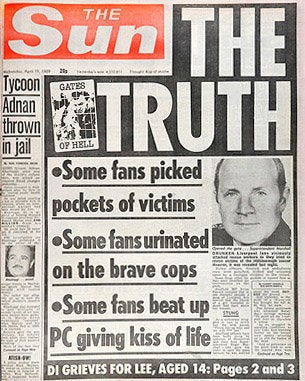
Meanwhile, last week, the Daily Mirror, a rival to The Sun, was gloating:
'Former newspaper editor Kelvin MacKenzie claimed he “got caught up” in the Hillsborough cover-up. Mr MacKenzie signed off on the The Sun’s shameful ‘The Truth’ front page in the wake of the 1989 disaster. '
Tuesday, 21 January 2014
Widespread Public Anger at Politicians
Only 12% of the young will vote!
DAVID Blunket hit out today at the number of young people who intend to vote (according to the Hansard Society), and speaking on BBC Radio Four's Today program, he challenged Will Self, the author, for being negative about politicians. Mr. Self said that it didn't require critics of politicians, such as himself, to put people off politics as the politicians created a repugnance of political life through their own greedy and selfish actions.
Self had criticised Blunkett for taking many thousands of
pounds doing work for Rupert Murdoch's news empire and involvement in two
political scandals that contributed to his resignations as a minister under the
last government. And Mr Blunkett tried to identify himself with good causes, saying : "People, thousands of them,
day in, day out, give their time voluntarily to work within political parties
and campaigns such as Make Poverty History, to try and make the world a better
place.'
These remarks come after the Guardian last month published ICM
research showing that nearly half of Britons say they are angry with politics
and politicians, in a survey analysing the disconnection between British people
and their democracy. The research found
anger with the political class and broken promises made by high-profile figures
that most rile voters, rather than boredom with Westminster.
Lord Ashdown, the former Lib Dem leader, warned last
month that voter trust in institutions is 'crumbling into dust' and
raised the problem of disaffection. He said:
'I cannot exclude the possibility that we'll see people
who don't believe they can make their point within the political system making
their point on the street instead.'
Ashdown has said voter disaffection could have a radical impact
on the general election 2015:
'We are all proceeding on the basis
that the next election will be a conventional election. I'm not entirely
certain that if the leviathan lying below the surface decides to swish its
tail, that's necessarily the case.'
Sarah
Teather, the Lib Dem former children's minister, has also spoken about some of
the reasons for declining trust in politicians. She said ministers have become
caught up in a 'cycle of democratic self-harm'.
Pity the British anarchist movement is in such a poor state; indeed it's in a worse state even than that of the British politicians at Westminister, or it could to take advantage of this situation.
Pity the British anarchist movement is in such a poor state; indeed it's in a worse state even than that of the British politicians at Westminister, or it could to take advantage of this situation.
Tuesday, 9 April 2013
Thatcher & the Trade Unions
WHAT is the legacy of Thatcher? The defeat of the British trade unions in the 1980s? She said of herself the 'One doesn't win by being against things, one wins by being for something!' In the end Margaret Thatcher was a conviction politician with a vision, her enemies in 1979 didn't have a vision but essentially they wanted to preserve the status quo, and she left them reacting to her agenda.
Today, so far as the the British left and the trade unions are concerned little has changed, they prevail as hopeless reactionaries jumping around like grass-hoppers to the tune of HM Government. The Ken Loach film 'The Spirit of 45' is a memento to our hopeless political impotence on the left as a progressive force: leaving us with a simpering nostalgia for a bygone age and a hankering for the clapped-out concept of nationalisation.
The thing is that Thatcher had a vision and a strategy, and she worked to bring them about and to successfully enforce them against the unions. Her enemies, like Scargill, were clever tacticians but imbued with a short-sightedness, sectarianism and parochialism. At that time the trade unions were rooted in a deep conservatism which gave them a degree of power without responsibility. The trade unions leaders then were the smug shufflers of expediency in the workplace, who merely wanted the right to veto management and government, and feared the burden of full-blown workers' control of the workplace.
So it was that the British trade unions and their leaders were marginalised. From once being a major voice in a land in which they were treated to beer and sandwiches by the great and the good at Number Ten, and from a time when the Financial Times had a full page daily dedicated to labour disputes, they suddenly shrank in size both numerically and in terms of political influence until they were, like the Church of England in secular society, just another voice among the babble of commentators. Thus, the labouring masses may be allowed a word via the Secretary of the TUC, just as the voice of God has his say at the discussion table as interpreted by the Archbishop of Canterbury, before moving on quickly to Simon Jenkins or some other political pundit on Radio Four.
So it was that under Thatcherism, the TUC and the whole of the British trade union movement became a busted flush, totally discredited because by that time it's leaders had no radical mission or progressive project to fulfil beyond protecting their own fossilised fiefdoms and narrow, backward-looking ideas. The thing is the Thatcher and Nicholas Ridley knew what they were doing and they knew what they wanted, their enemies on the left and in the unions didn't. It is still hard to believe that the British left has yet understood this failure, or realised the need for a more radical vision.
Friday, 5 April 2013
Bad Behaviour: Mick Philpott & John B. Watson
YESTERDAY just as I was digesting the sentence of 15-years awarded to Mick Philpott for the manslaughter of his children when I was put off my dinner by a program on Radio Four dedicated to the American psychologist, John B. Watson, considered the father of behaviourism. Mick Philpott is today being derided as a monster for killing his kids in a reckless act in which he tried to get control over his former mistress. His defence solicitor claimed he was a 'good father' and Ann Widdercome MP, the former Prisons Minister who knew Philpott briefly, had to admit that the kids were well looked after.
The program on Watson on Radio Four, revealed he went on to prove his theory in a series of experiments involving a subject named 'Little Albert B', which would send today's ethics committees into the stratosphere! Albert B, an orphan left in a hospital since birth, was recruited for this study at the age of nine months. First, Watson established whether he had any innate fears by exposing him to different stimuli including a white rat, a rabbit, a monkey, a dog, masks, cotton wool. Albert showed interest in all of these, reaching to touch them; he displayed no fear, so they were deemed neutral stimuli. Watson's aim was to generalise fear in the young child, so that neutral stimuli could engender a response of fear.
During this experiment on 'Little Albert' he conducted an affair with his student-assistant Rosalie Rayner. And, it was in October 1920 that Johns Hopkins University asked Watson to leave his faculty position because of publicity surrounding the affair he was having with this graduate student-assistant Rosalie. Watson's affair had become front-page news, during the consequent divorce proceedings, in the Baltimore newspapers.
After he got himself sacked J.B. Watson used his skills to sell deodorants to the American public by convincing them that they smelled. Then to continue to test his experiments on children he started on his own youngsters. One son, together with his new wife and assistant Rosalie, he subjected to a 'jealousy test' in which he left the lad for three months deprived of all contact with the family, then he and his wife paid a visit in which they kissed, 'made love', and then staged a fake fight in front of the three-year-old until, overwhelmed and confused, the child was provoked to attack and strike the father. Later in the program we learned, not surprisingly, that the lad in later life twice tried to commit suicide. The last time successfully. According to one of Watson's grandaughter speaking on last night's program there had been in total three suicides in the family.
In the end I must confess to wondering which was the worse father? The angry, passionate and controlling Mick Philpott, who is shown in today's newspapers giving the V-sign, or the cold calculating distinguished psychologist considered the father of behaviourism.
The program on Watson on Radio Four, revealed he went on to prove his theory in a series of experiments involving a subject named 'Little Albert B', which would send today's ethics committees into the stratosphere! Albert B, an orphan left in a hospital since birth, was recruited for this study at the age of nine months. First, Watson established whether he had any innate fears by exposing him to different stimuli including a white rat, a rabbit, a monkey, a dog, masks, cotton wool. Albert showed interest in all of these, reaching to touch them; he displayed no fear, so they were deemed neutral stimuli. Watson's aim was to generalise fear in the young child, so that neutral stimuli could engender a response of fear.
During this experiment on 'Little Albert' he conducted an affair with his student-assistant Rosalie Rayner. And, it was in October 1920 that Johns Hopkins University asked Watson to leave his faculty position because of publicity surrounding the affair he was having with this graduate student-assistant Rosalie. Watson's affair had become front-page news, during the consequent divorce proceedings, in the Baltimore newspapers.
After he got himself sacked J.B. Watson used his skills to sell deodorants to the American public by convincing them that they smelled. Then to continue to test his experiments on children he started on his own youngsters. One son, together with his new wife and assistant Rosalie, he subjected to a 'jealousy test' in which he left the lad for three months deprived of all contact with the family, then he and his wife paid a visit in which they kissed, 'made love', and then staged a fake fight in front of the three-year-old until, overwhelmed and confused, the child was provoked to attack and strike the father. Later in the program we learned, not surprisingly, that the lad in later life twice tried to commit suicide. The last time successfully. According to one of Watson's grandaughter speaking on last night's program there had been in total three suicides in the family.
In the end I must confess to wondering which was the worse father? The angry, passionate and controlling Mick Philpott, who is shown in today's newspapers giving the V-sign, or the cold calculating distinguished psychologist considered the father of behaviourism.
Tuesday, 25 September 2012
Black Roses' Review: Killing of Sophie Lancaster
AS we entered the last week of the play 'Black Roses - The killing of Sophie Lancaster', I chatted with the father of the actress of the young lass Rachel Austin who took-off Sophie in the play in The Studio at the Royal Exchange Theatre, Manchester. He had just bought a copy of Northern Voices 13, with an interview with Sophie's mother, Sylvia Lancaster. One woman had just said to me how awful it was, the more so for where it took place in a town called Bacup, that is so much a part of traditional Lancashire. It is hard to believe that a town like that could have led to a crime of such bloody proportions as she and her boyfriend were kicked by a mob of local lads. In the end she died of her wounds and her lover, Robert Maltby, was left traumatised and physically damaged.
The play, in which Julie Hesmondalgh of Coronation Street plays Sophie’s mother Sylvia, has sold-out of the original tickets, and more space has been provided owing to extra demand for seats. Last Saturday, at the matinee the audience was mostly female and middle-class. This play originated on Radio Four, but the austere surroundings of The Studio set serve the theatrical purpose well. Thus, we have the homely Mum philosophising, while the exotic 'Goth Girl' is hovering round her like a spectre from a different realm. In an interview with Northern Voices last year, Sophie's mum, Sylvia, had said: 'For Sophie being a Goth was like being a "Traditional Goth", she was a Goth like Adam Ant's "New Romantics" and Boy George'.
Poetry by Simon Armitage and homespun philosophy by Sylvia Lancaster; the exotic and the everyday captured together in the same small space. Individuality and the ordinary united. During last Saturday's performance one man collapsed and the play had to be stopped. Troubled teenager grows up to become an accidental martyr in Stubbylee Park, and an icon of the outsider is created. The tension in the play thrives between mother and daughter, as the shadows form and the trainers stamp their marks on both Robert and Sophie: aim for the face seemed to be the general war cry of the five-man mob.
Catherine Smyth in her book 'Weirdo, Mosher, Freak: the murder of sophie lancaster' (2010) price £7.99 available at the Cornerhouse Cinema Bookshop on Oxford Street in Manchester, wrote: 'Personally, I felt Sophie's murder was more akin to a Manchester, Liverpool or London crime, but not Bacup... High unemployment, crime, alcohol abuse and drug dependency has meant that any beauty in Bacup is often overshadowed and the town's decline is obvious for all to see.'
Play runs until September 29th, 2012. Tel.: 0161 833 9833 (www.sophielancasterfoundation.com)
The play, in which Julie Hesmondalgh of Coronation Street plays Sophie’s mother Sylvia, has sold-out of the original tickets, and more space has been provided owing to extra demand for seats. Last Saturday, at the matinee the audience was mostly female and middle-class. This play originated on Radio Four, but the austere surroundings of The Studio set serve the theatrical purpose well. Thus, we have the homely Mum philosophising, while the exotic 'Goth Girl' is hovering round her like a spectre from a different realm. In an interview with Northern Voices last year, Sophie's mum, Sylvia, had said: 'For Sophie being a Goth was like being a "Traditional Goth", she was a Goth like Adam Ant's "New Romantics" and Boy George'.
Poetry by Simon Armitage and homespun philosophy by Sylvia Lancaster; the exotic and the everyday captured together in the same small space. Individuality and the ordinary united. During last Saturday's performance one man collapsed and the play had to be stopped. Troubled teenager grows up to become an accidental martyr in Stubbylee Park, and an icon of the outsider is created. The tension in the play thrives between mother and daughter, as the shadows form and the trainers stamp their marks on both Robert and Sophie: aim for the face seemed to be the general war cry of the five-man mob.
Catherine Smyth in her book 'Weirdo, Mosher, Freak: the murder of sophie lancaster' (2010) price £7.99 available at the Cornerhouse Cinema Bookshop on Oxford Street in Manchester, wrote: 'Personally, I felt Sophie's murder was more akin to a Manchester, Liverpool or London crime, but not Bacup... High unemployment, crime, alcohol abuse and drug dependency has meant that any beauty in Bacup is often overshadowed and the town's decline is obvious for all to see.'
Play runs until September 29th, 2012. Tel.: 0161 833 9833 (www.sophielancasterfoundation.com)
Monday, 6 December 2010
'My name's “HUNT”, not “CUNT”!'
James Naughtie delivers a spoonerism before breakfast
'AFTER the NEWS', announced the normally sober broadcaster, James Naughtie, 'we are going to be talking to Jeremy Cunt ...er Jeremy Hunt! - the Culture Secretary about the art of Broadband'. That was just before the Today News on Radio 4 at 8am this morning, and within minutes the emails were flooding into Broadcasting House with one from a psycho-linguist who said David Cameron was to blame for appointing a man with the name of 'Hunt'. As if that was not enough, it was a live broadcast and Mr Naughtie had to go on to valiantly, between chuckles, to struggle to introduce the 8am News while all the time desperately pretending he had a frog in his throat. Chris Draper tackled this spooneristic problem with Yorkshire Curd Tart in the last issue of Northern Voices. Today's incident didn't quite descend into the giggles that accompanied the Brian Johnson cricket commentary that included the 'leg over' term, but it has led to widespread comment throughout the day on Radio 4. However, an hour later Andrew Marr referred to the James Naughtie incident on Start The Week on Radio 4, during a discussion on Freudian slips, and blurted out 'Jeremy C***' before gasping with laughter.
Dr Mike Page, a reader in psychology at the University of Hertfordshire, has said it was a classic Spoonerism — the verbal blunder named after the Reverend William Archibald Spooner (1844–1930), renowned for such slips while warden of New College, Oxford. Dr Page said: 'Studies show that where two words share the same vowel sound this will promote the exchange of the preceding consonant ... like saying queer old dean' instead of dear old queen'.
Dr Page did not think the slips revealed that BBC presenters hold the Culture Secretary, who has ordered the corporation to cut spending, in low esteem.
'Freud's theory of para-praxes is that an unconscious or concealed view may emerge inadvertently in a verbal error, but Naughtie was almost certainly a spoonerism. Marr fell victim to the white bear effect': the more he tried not to think of the word, the more he primed his brain to say it.'
'AFTER the NEWS', announced the normally sober broadcaster, James Naughtie, 'we are going to be talking to Jeremy Cunt ...er Jeremy Hunt! - the Culture Secretary about the art of Broadband'. That was just before the Today News on Radio 4 at 8am this morning, and within minutes the emails were flooding into Broadcasting House with one from a psycho-linguist who said David Cameron was to blame for appointing a man with the name of 'Hunt'. As if that was not enough, it was a live broadcast and Mr Naughtie had to go on to valiantly, between chuckles, to struggle to introduce the 8am News while all the time desperately pretending he had a frog in his throat. Chris Draper tackled this spooneristic problem with Yorkshire Curd Tart in the last issue of Northern Voices. Today's incident didn't quite descend into the giggles that accompanied the Brian Johnson cricket commentary that included the 'leg over' term, but it has led to widespread comment throughout the day on Radio 4. However, an hour later Andrew Marr referred to the James Naughtie incident on Start The Week on Radio 4, during a discussion on Freudian slips, and blurted out 'Jeremy C***' before gasping with laughter.
Dr Mike Page, a reader in psychology at the University of Hertfordshire, has said it was a classic Spoonerism — the verbal blunder named after the Reverend William Archibald Spooner (1844–1930), renowned for such slips while warden of New College, Oxford. Dr Page said: 'Studies show that where two words share the same vowel sound this will promote the exchange of the preceding consonant ... like saying queer old dean' instead of dear old queen'.
Dr Page did not think the slips revealed that BBC presenters hold the Culture Secretary, who has ordered the corporation to cut spending, in low esteem.
'Freud's theory of para-praxes is that an unconscious or concealed view may emerge inadvertently in a verbal error, but Naughtie was almost certainly a spoonerism. Marr fell victim to the white bear effect': the more he tried not to think of the word, the more he primed his brain to say it.'
Subscribe to:
Posts (Atom)

 Posts
Posts


