Showing posts with label Museums. Show all posts

Wednesday, 13 May 2020

José Netto Gibraltarian syndicalist & Jack Jones

José Netto at the Casa de la Memoria in Jimena de la Frontera

by Brian Bamford

Editorial note:  I first met José Netto in 
March 1964, when I, my wife and baby 
6-month-old son (born in Denia, Alicante
had to leave Spain where we had been living 
and working for 12 month, and crossed the 
frontier in order to to comply with the then 
Spanish law. 

We had a 'letter of introduction' when we 
arrived at his council house in a working-
class area on the Rock.  He was living with 
his own young family and then worked on the 
tools in the Her Majesties Dockyard, but being 
an anarcho-syndicalist who had joined the 
then Syndicalist Worker's Federation 
while working in London in the 1950s.  
He and his mates helped to find me a job 
working as an electrician at the airport for
the Ministry of Defence repairing the landing 
lights on the airstrip.

One of José's close mates was Navarro, who was an 
anarchist supporter of the CNT, and had fought
for the Republicans in the Spanish Civil War in
following the military insurrection in July 1936.  

Although José was an anarcho-syndicalist in Gibraltar
the syndicalists were not sectarian and had close working
relations with historic labour leaders like Albert Risso*, 
who became the first president of the Gibraltar Confederation 
of Labour which, in 1963, merged with the  
Transport and General Workers' Union, now Unite.


* Albert Risso was one of the first political activists in the British territory of Gibraltar. at a very young age, he was one of the campaigners for the involvement of the Gibraltarian civilian population (and especially its working class) in governing the colony. In 1919, he was one of the members of a so-called "deputation of working men" who went to London to meet the Secretary of State for the Colonies and ask for the creation of a representative body that could succeed the Sanitary Commission, an unelected body whose members, usually belonging to the upper class, were nominated by the Governor. The campaign, driven by the trade unions, brought about the creation of the Gibraltar City Council in 1921.[2] 
By the start of World War II,[1] Risso was a foreman mechanic and a City Council employee. When most of Gibraltar's civilian population was evacuated, Risso was one of the few Gibraltarians that remained on The Rock.
**************************** 

José Netto, the historic syndicalist anarchist trade union leader in Gibraltar in the last half of the 20th Century, visited the Casa de la Memoria in Jimena de la Frontera (Cádiz), on the 28th, January 2019, a few months after the donation of a library of this entidad of five volumes of the encyclopedia El hombre y la Tierra, a history of humanity written by Eliseo Reclus in 1905.  Reclus was a French scientist and creator of the Geografía Social, being one of the first theoreticians of anarchism and a man of action who participated in the Paris Commune, together with other famous historic activists.


These five volumes of El hombre y la tierra were edited in Barcelona en 1933. The translation is by Anselmo Lorenzo, the principle great leader of Spanish anarchism and its representative in the First International.

These volumes form part of the particular library of José Netto, and they were offered up from the hands of a syndicalist of the Confederación Nacional del Trabajo (CNT) when the Campo de Gibraltar had suffered in 1936, and  Spaniards in the area had struggled with death at the hands of the military coup that rose against the Second Republic.

José Netto received the books from a man who had been an exile since the 1950s and a few days after learning that that anarchist had committed suicide. The donation to the Casa de la Memoria was effected months later during the last session of the seminar of the Cursos de Verano de la Universidad de Cádiz in San Roque, the son of José Netto, Michael Netto, in Gibraltar, and was received by the President of the Foro for the Memoria del Campo de Gibraltar, Andrés Rebolledo, to deposit in the Casa de la Memoria La Sauceda.

In his visit to the Casa, José Netto, who now lives in Atajate (Málaga), had also donated two poster images of the Second Spanish Republic. 

************************** 

The donación to the Casa de la Memoria took effect during the last session of the seminar

la efectuó meses atrás, durante la última sesión del seminario de memoria histórica de los Cursos de Verano de la Universidad de Cádiz en San Roque, the son of José Netto, Michael Netto, in Gibraltar, and was received by the President of the Foro for the Memoria del Campo de Gibraltar, Andrés Rebolledo, to deposit in the Casa de la Memoria La Sauceda.


El histórico sindicalista de Gibraltar José Netto visita la Casa de la Memoria tras donar a la Biblioteca la enciclopedia de Eliseo Reclus


José Netto wrote the following obituary for Jack Jones of the T&G:

My relation with Jack stretches back to the late 60s early 70s when I was appointed District Officer in 1972, and he was the TGWU General Secretary.  He has always been my mentor, as we shared common ideology, and has been a tremendous influence in my professional development as a trade unionist.  He was responsible for financing the construction of our premises in Town Range, which at the beginning we used to call?  La Casa del Pueblo?  He played a very leading role in supporting our fight for parity of wages and salaries, against the MOD.  As the British and local government had rejected this claim, on the grounds that it could not be sustained economically, a fact that was later proved wrong.

The intention of the fascist forces in Spain, during the Franco regime, to strangle the economy, with its restrictions and the closure of the land frontier, was defeated by the contribution of the labour movement in Gibraltar, of which I feel very proud of.

I wish to pay tribute on behalf of the working class of Gibraltar, to this comrade, so that we never forget how much we owe to him.

Rest in peace, Bro. Jack.

*****************************************

Monday, 13 January 2020

Heritage Sector & Bigots!

 BLANCMANGE or NEUTRALITY in the Heritage Sector?

NEXT Friday, the 17th, January 2020, Tristram Hunt, the director of the Victoria & Albert Museum in London, will begin a series of talks on Radio 4 about Museums in the 21st Century and their relevance.  In the blurb the BBC announces this forthcoming event thus: 
'Museums have never been more popular around the world or faced such sustained criticism. While the Louvre enjoys record-breaking visitor numbers, Abu Dhabi's Saadiyat Island builds a new museum campus for the Middle East and blockbusters from Leonardo to Van Gogh to David Bowie circle the globe, museums are also under challenge. Critics questions historic claims to neutrality, call for the repatriation of colonial-era artefacts and protest over the origins of sponsors' money.'

In May 2018, the director of the Victoria & Albert Museum, Tristram Hunt, had caused a bit of a stir when he announced: ‘I see the role of the museum not as a political force but as a civic exchange.’  Adding that he ‘was not so sure [that museums] have a duty to be vehicles for social justice’.

On July 5th, 2019, in an article on the Red Pepper website Siobhan McGuirk wrote a passionate piece entitled 'Museums are socially vital precisely because of their political nature' in which it was declared:
"We are in the midst of a momentous self-regarding public debate over what it means to be British. From the shadows of referendum campaigning until now, misrepresentations, half-truths and outright lies have proliferated, recasting the past to demonise the other. The phrase ‘fake news’ has been co-opted to the point of meaninglessness, while flagship media outlets grant platforms to bigots, justified as promoting ‘neutrality’ – as if facts were up for debate, or ‘civic exchange’."

Indeed, Red Pepper's mention of  'flagship media outlets grant platforms to bigots', naturally reminds one of an incident in April 2010 in which the Rochdalian lass,Gillian Duffy, 65, heckled the prime minister [Gordon Brown} as he was interviewed live on TV in Rochdale.  Brown initially ignored her but was then asked by senior aides in his entourage to meet her.

Later the Prime Minister was then famously caught on tape as, unknown to him, the microphone was still turned on:
Brown: 'That was a disaster. Well I just ... should never have put me in with that woman.  Whose idea was that?'

Aide: 'I don't know, I didn't see.....'

Aide: 'What did she say?'

Brown: 'Oh everything, she was just a sort of bigoted woman.  She said she used be Labour. I mean it's just ridiculous.

 'Just a sort of bigoted women'.  Which is precisely the attitude someone on the self righteous left of politics would take, is it not?

Brown then followed with more painfully patronising talk from:

Brown'Very good to meet you, and you're wearing the right colour today. Ha, ha, ha: How many grandchildren do you have?'
Duffy'Two. They've just got back from Australia where they got stuck for 10 days. They couldn't get back with this ash crisis.'
Brown: 'We've been trying to get people back quickly.  Are they going to university.  Is that the plan?
Duffy: 'I hope so. They're only 12 and 10.'
Brown: 'Are they're doing well at school?  [pats Duffy on the back]  A good family, good to see you. It's very nice to see you.'

How pompous and smarmy can you get?  And is it any wonder that Labour is failing to gel with the northern working class?

Red Pepper itself has previously distinguished itself by finding space to argue the case for 'no platforming' people they don't like or people they may regard as being 'bigots'.  .   

For more on Museums go to: 


****************


Thursday, 10 January 2019

TINA'S TRANSGRESSIVE TEA-TIME!

by Christopher Draper

I'VE just come back from a fascinating trip to Bury Museum and was particularly amused by my visit to the first floor cafe, or 'TINA'S TEAROOMS' as it is now denominated.  I was initially impressed by the non-gender-binary signage marking the location of "TINA'S TOILETS", regrettably not quite as positive or joyful as the sign illustrated above but nonetheless adequate and appropriately enlightened.  Less enlightened however was Tina's binary-gender-specific afternoon tea menu! (illustrated below)


Whilst GENTLEMEN (for £15) are offered 'Doorstopper Sandwiches' and 'A Big Wedge of Cake', LADIES (£13) get 'Finger Sandwiches' and 'Mini Cakes and Fancies'.  Are us NON-BINARIES expected to starve?
***********

Saturday, 18 February 2017

Wigan Pier'& the Spanish Civil War

The Spanish Civil War and Wigan
Museum of Wigan Life
Tuesday 28th February
12 noon – 1pm
Price: £2.50 per person (incl. tea/coffee)
  booking required
We mark the 80th anniversary of the Battle of Jarama when the International Brigades helped stop Franco’s advance on Madrid during the Spanish Civil War.  What made local people up sticks and fight for democracy and socialism in another country?  What was the background to this international conflict?  Find out more about the passion and sacrifice of the young volunteers of the International Brigades and their supporters both here and in Spain.
George Orwell – The Road to Wigan Pier at 80!
Stephen Armstrong
Museum of Wigan Life
Tuesday 7th March
12 noon – 1pm
Price: £2.50 per person (incl. tea/coffee)
 booking required
Stephen Armstrong, author of The Road to Wigan Pier Revisited, marks the 80th birthday of Orwell’s original book with this fascinating talk about Eric Blair (George Orwell) and his writing.  Orwell researched his book in the old reference library, now the Museum of Wigan Life, and his work has sometimes been controversial in the town.  Armstrong examines the context in which Orwell wrote and his approach to social reportage.  Come along and find out more about Wigan’s relationship with one of the 20th century’s most important writers.

Our thanks to Community History Manager Lynda Jackson in Wigan for the details.

Saturday, 25 January 2014

Rochdale Touchstones Cafe to Re-open

Cafe Life 
Café Life at Touchstones Rochdale is a great place to relax in a friendly atmosphere.
The Café will be re-opening on Wednesday 29 January with food served from 11am. Link4Life is working in partnership with Pure Innovations who will operate the Café on our behalf.
Whether you are visiting our exhibitions, just passing by or meeting up with friends - why not come along and have a relaxing cup of coffee and sample our wholesome menu at Café Life.

Opening times:

Cafe: Tuesday-Saturday 10am-4pm
Touchstones Rochdale: Tuesday-Saturday 10am-5pm
Did you know that Touchstones Rochdale have rooms to hire?

Friday, 18 January 2013

Spain's Best Exhibitions of 2012

Our art correspondent Chris Draper says: 'It's not the folk that counts, it is the spaces, town-scapes and landscapes!'

LAST month, El Pais reported that the critical acclaim of both the public and the critics in Spain for the best art exhibition had co-insided with the exhibition of Edward Hopper's work at the Museo Thyssen-Bornemisza in Madrid coming out on top. At the same time as the critics gave their verdict in favour of Hopper, so the results of the voters on El Pais digital concluded the same.  Ought we to draw any significance or comfort from these two verdicts the one based upon supposed expertise and the other rooted in the public instinct and eye for what it likes?
Pinned Image

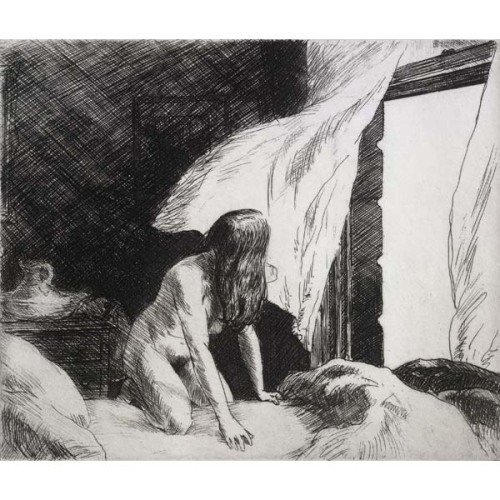
Evening Wind by Edward Hopper 1921
 
Writing in El Pais, Guillermo Solana wrote: 'For me the two tribunals, the critics and the public, have the same authority, and they both complement each other.  The differences ascribed to the critics we understand well, while the public is always and enigma'  Senor Solana takes the view that the importance of Edward Hopper rests beyond his style as a painter, and that his popularity with the public has much to do with the atmosphere of the spaces in his pictures that give the public a window on the


'La carretera que atraviesa los Wolds' by David Hockney

The David Hockney exhibition at Museo Guggenheim in Bilbao showing his recent figurative paintings of Yorkshire countryside, and other landscapes such as the one above came second after the Hopper exhibition.  This interesting because in the forthcoming Northern Voices No.14, Christopher Draper will be featuring David Hockney alongside L.S. Lowry from Salford in his regular 'Six O' the Best' contribution.  Hockney, frequently with a fag in his hand, is a bit of a curmudgeon, but then again so was Lowry. 

The third, in the Spanish best exhibitions line-up for 2012 is the 'El ultimo Rafael' at Museo del Prado.  'Claes Oldenburg' came in at number four, also at the Museo Guggenheim in Bilbao, and 'La vanguardia aplicada,  Tipografia y diseno grafico (1890-1950)' at the Fundacion Juan March scored at number five. Sixth was the exhibition of 'Maria Blanchard' at the Fundacion Botin y Museo Nacional Centro de Arte Reina Sofia in Madrid, and the seventh was 'Nacho Criado' also at the same venue.  At eighth was 'El joven Van Dyck' also at Museo del Prado.  Number nine was 'Genealogias feministas en el arte espanol:  1960-2010' at the Musac, and ten was 'Encuentros con los anos 30' at the Museo Nacional Centro de Arte Reina Sofia in Madrid.

Recently, talking to Chris Draper – the N.V. Correspondent on art and culture - he told me that Lowry had said that the 'match-stick' figures in his pictures are the least important part of the work, I think he told me that Lowry merely regarded them as add-ons or afterthoughts, and that it was the spaces and landscapes displayed that were the essence of his art. With Edward Hopper, Guillermo Solera in El Pais writes:
'Hopper fascinates the public, because the majority of the public look to see in a pictures the same as what they look for in a novel and in a film, and this precisely what they are after, they are looking for a world – a habitable space, a window to travel into other lives, and into the possibility to live these lives imaginatively and the hope to finally own these existences...'  

Laurence Stephen Lowry from Salford, was a rent collector, while the New Yorker Edward Hopper, Senor Solana writes, worked in his youth as a graphical illustrator of journals and books, and that he went on to apply these skills to his paintings.  Considering these point about Senor Solana's view on Edward Hopper's popularity with the Spanish public it will be interesting to see how Chris Draper deals with some of the great artists of the North of England such as Lowry from Salford, Hockney from Yorkshire, Etty from York, the Pitmen Painters from Northumbria and even Walter Kershaw from Rochdale.