Showing posts with label liverpool. Show all posts

Sunday, 18 April 2021

Stop Deskilling: Liverpool Message of Solidarity

MESSAGE OF SOLIDARITY FROM UNITE LIVERPOOL 0538 BRANCH TO ELECTRICIANS PROTESTING AGAINST DESKILLING.
Unite Liverpool 0538 Branch offers full support and solidarity to the electricians who are protesting against deskilling.
If bosses get their way. 70% of work currently undertaken by skilled electricians will be carried out by ESOs (electrical service operators). Instead of a 4 to 5-year apprenticeship, there would only be a 3 to 5-week training programme. So instead of 10 qualified electricians being employed there will be 3 electricians and 7 ESOs, which would start a race to the bottom.
Workers protesting against this deskilling deserve our total support.
In solidarity,
Unite 0538 Branch
********************************************

Thursday, 15 October 2020

John Foley: A Liverpool Legend

Editorial comment: Most towns and cities have a colourful figure who stands out against the trend. In Liverpool, John Foley seems to have mastered the art of embracing an awkward squad to challenge the local scenario. The Liverpool Echo describes John as 'father figure of St John's Market', and a threat to those he felt were 'doing wrong'. He was a campaigner on many issues, including helping to rescue the famous market when it was threatened with closure. He died on the 9th, September, in Royal Liverpool Hospital after catching Covid-19. John gained the admiration of many from Liberals, like Cllr Richard Kemp, who campaigned with him on a number of issues, to Scouse anarcho-syndicalists in the local Solidarity Federation.
Colin Laphan, a close friend of John’s and the chair of the St John’s Market Traders Association, told The Echo:
'He was everything that was good about Scousers, he was salt of the earth, a fighter for justice – he was what Liverpool is all about.'
He added: 'The idea that anyone could think this virus isn’t serious is insanity. We have lost two of our friends and traders – John had no other illnesses before he got covid.'
***********************************************
Tribute to John Foley: Liverpool legend by Mike C.
CAMPAIGNER and market stallholder John Foley has passed away from coronavirus at the age of 55.
John was well-known in his native Liverpool where he was a formidable campaigner against injustice and a thorn in the side of the powerful.
He fought a long campaign against Ryanair, arguing that the airline had unfairly terminated his daughter's employment whilst profiting from the thousands of euros she had paid for her flight attendant training.
The campaign involved publicity stunts such as climbing onto the roof of Liverpool John Lennon Airport, picketing Ryanair's AGM in Dublin, disrupting the Grand National and handcuffing himself to the goalposts during a Premier League match.
His campaign was backed by the Liverpool branch of the Solidarity Federation who supported many of his pickets and organised a day of action at European airports through the International Workers' Association.
Latterly, he pursued a private company contracted by Liverpool City Council to enforce litter fines. John believed the company were profiting by unfairly targeting vulnerable people on low incomes. The council eventually capitulated and ended the contract.
As a stallholder in Liverpool's St John's Market, John campaigned against the council's attempts to charge traders sky-high rents, and organised a rally to demand the re-opening of the market which remained closed even though other retailers were open following lockdown.
His final campaign was to stop the closure of two local care homes, which was ultimately successful.
As well as being a passionate campaigner against injustice, John was a dedicated family man, and a warm and genuine bloke. I was proud to have known him and campaigned alongside him.
GO TO: https://www.youtube.com/watch?v=i0I-MZC2FEI
********************************************

Saturday, 13 June 2020

Unpalatable Truths About The Slave Trade


by Les May

WHATEVER the courts finally decide, to many people the slow death of George Floyd under the knee of a policeman was murder and we should not lose sight of this as different groups compete with each other to use his death to foster their own agenda.

A few evenings ago a news programme carried an item in which the interviewee complained that although Tony Blair had expressed his regret about the transatlantic slave trade he had not ‘apologised’.  Now it has never occurred to me to ask Queen Elizabeth to apologise on behalf of her family for presiding over a system which kept my people in serfdom for some 400 years, nor that I should demand the stained glass windows which depict these monarchs in Rochdale Town Hall should be taken down, but I’ll let that pass.  The interviewee blamed this on Blair’s ‘white privilege’ seemingly blind to the fact that he is enjoying the privilege of living in a First World country with all the benefits that brings.

But there was more to this than an exercise in gesture politics.  What the interviewee seemed to be trying to do was resolve the question of what we should do with the statues of slave traders and the like, by capturing the narrative and presenting what is in effect a sanitised version of the transatlantic slave trade suited to modern prejudices.

This was a business enterprise and the transport of 12 million Africans across the Atlantic into slavery was just one part of it.  As it came to full development in the 18th century it worked like this.  Metal goods made in Birmingham and cloth made in Lancashire were taken to Africa and traded for slaves. Slaves were transported across the Atlantic and traded for sugar in the Caribbean.   In turn this was transported back across the Atlantic to ports like Bristol and Liverpool which grew wealthy on the proceeds.  Then of course the cycle started up all over again.

So where did the 12 million slaves come from? Europeans had only a tiny foothold around the coasts of Africa and relied upon local rulers to provide the slaves, which they were more than happy to do in exchange for the manufactured goods they desired.  There was also a trans Saharan trade which supplied black slaves to North African countries.  The fact that African’s themselves were participants in enslaving fellow Africans is one of the unpalatable things we need to understand, and perhaps remind people of, when thinking about how we should respond to the demands that statues should be removed from our towns.   It should certainly be a part of the narrative surrounding the trans Atlantic slave trade in which Britain played a part.

What is not part of the agenda for these competing groups who seem so eager to rake over the coals of the past is the fact and the reality of modern day slavery. The estimates of the number of people in some form of slavery now are some two to three times higher than the 12 million or so Africans transported across the Atlantic over a period of about 120-150 years.

Anyone looking at the maps of modern day slavery will immediately become aware of the fact that it is not confined to countries inhabited by Europeans or by people of European descent.  The top ten countries for slavery are, China, DRC, India, Indonesia, Iran, Nigeria, North Korea, Pakistan, Philippines and Russia. But that does not mean it is absent from First World countries.   It has been suggested that more than 10,000 people are enslaved in the UK today.

Like the trans Atlantic slave trade of the late 17th to mid 19th century modern slavery is a business.  A Guardian article suggests it generates more than £100 billion in profits each year.  What should disturb us all is that in many cases the products produced by modern slaves are bought by us.  The supply chains which produce our clothes and our high tech goods are unlikely to be free of the taint of slavery. Which of course means that many of the people tipping statues into the nearest dock will, like you and I, be beneficiaries of modern day slavery.

The unpalatable truths are that fellow Africans were quite happy to supply captives to European slave traders during the period of the trans Atlantic slave trade and that slavery has not gone away, it is still with us.  But we have a choice; we can obsess about the past or we can work to eliminate it in the present.  The first of these will give us a warm glow of self satisfaction; the second will be a hard slog and require us all to examine our consciences about why we are able to buy some imported goods so cheaply.

If you care to follow the link to what has been called the ‘Arab Slave Trade’, you may wonder as I do, whether the term BAME, which is frequently used to imply some community of interest amongst the groups included in the acronym owes a great deal to wishful thinking.


Typing the search terms ‘economist modern slavery’ will lead to a wealth of detail about global supply chains and their links to slavery.

****************************

Thursday, 8 August 2019

Democracy & the anarchists


by Brian Bamford


REVIEWING a recent interview involving the academic Ruth Kinna, the critic Les May asks on this blog about the way she tackles the question about the attitudes of English anarchists to democracy. Here Les May suggests that she hesitated and appeared to stumble when the interviewer asked her whether anarchists believed in democracy.   Mr. May puts this down to the abysmal way in which some modern anarchists have handled themselves when confronted with political, moral and intellectual differences.  He probably has in mind people being roughed-up, shoved around and sent packing at anarchist  book fairs and other events.  The list is long but the recent exclusions of Helen Steel has excited interest, and not just on Mums Net.  This raised another issue: the crude hierarchical nature of the anarchist's methodology in so far as some of them seem more than willing to defend minor celebrities like Ms. Steel but hold back from backing 'lesser' figures who fall foul on some political point of order.

At the Liverpool Anarchist Book fair last year, where a blacklist was in operation and tolerated, even by Milan Rai, the editor of Peace News failed to give his full backing to people who were blacklisted there.  Mr. Rai who accepts that the practice of a blacklist was unfair in Liverpool, non-the-less he didn't let it get in the way or prevent him from doing his own book promotion at the same event.  Political expediency seems to be name of the game among the political libertarians of all shapes and sizes.  Moral compass, it seems, takes a back seat.at all levels among the English, particularly when it gets in the way of business.  The New from Nowhere set who were organising the Liverpool Bookfair, were more worried about losing business through the bad publicity that ensued than upholding any moral standards.

Les May writes:  'Democracy isn’t just about voting, it’s also about how we treat people we disagree with.'

What is democracy, we might ask?

The book 'School for Dictators' by the Italian novelist Ignazio Silone, has a character called Thomas: the Cynic who declares:  'Democracy is universal sufferage plus certain conditions.  The Greeks who were the first to experience it, [and] described four of them as follows: isonomia, or equality of rights before the law; liberty (which is a word plain enough in itself); isocratia or political equality; and isegoria, or freedom of speech.'

Mr. May asks:  'Why is it that people who claim to follow a political philosophy which extols personal freedom, trust in the individual, working for the collective good and personal responsibility, so often turn out to be authoritarian when they band together in groups?'

What maybe puzzling Mr. May, who has been around the English anarchists at least since the Freedom Anarchist Ball in the early 1960s, is that some anarchists today are actively repressing others and trying to prevent them presenting alternative viewpoints.  


But it is not only Milan Rai at Peace News who has fallen short and failed to be consistent in his stand against the persistent censorship, bullying and gagging among the adherents of anarchism in this country.  Pensioned-off academics like David Goodway and Peter Marshall who wrote 'Demanding the Impossible:  A History of Anarchism', both sit on a committee 'Friends of Freedom Press' which oversees a blacklist which named several northern anarchists.  This blacklist was compiled by a Freedom incomer from East Anglia Simon Saunders who also works as a hack for the Morning Star.

As Les May writes in his article:   'There’s no shortage of examples of such authoritarian behaviour which have been recorded on the Northern Voices blog, some in recent weeks.   Why do they do it?'

We live in troubling times in which politics on all fronts in this country has now been generally discredited by a degree of intolerance.  It is surprising that in some respects it is at its worst among the anarchists and among the readers at book fairs.  

*******

Tuesday, 30 July 2019

'BOOKFAIRS & BULLSHIT'

a critical review by Christopher Draper

THIS shocking booklet should be read and acted upon by everyone claiming allegiance to anarchism for there are no innocent bystanders.  I was intimately involved when the author was thrown out of last year’s 'Liverpool Anarchist Bookfair' and I witnessed the appallingly authoritarian behaviour of the organisers.  As he observes this was but a single incident in a growing catalogue of oppressive, exclusionary and often violent acts perpetrated by bigots claiming to be anarchists.  The author fairly concludes that, 'Anarchism has pretty much become a Wendy house for children to play in'.

The central argument is that the key role of class in the everyday oppression of millions of people has been displaced by the adolescent politics of personal identity and doctrinaire opinion is imposed and enforced by censorious authoritarians.  'The massive attention paid to identity politics has utterly distracted from attention to real problems and issues in the world – capitalist greed, poverty, injustice, war etc. In this respect, identity politics is the ultimate counter-revolutionary ideology and has utterly divided the left.  Much worse, people are now afraid to say what they think and are being turned off politics for good by this laughable charade.'

The author accurately identifies the takeover of anarchism by poseurs exploiting gender issues to gain a dominant role that enables them to define the limits of permitted opinion, dictate what’s labelled 'hate speech' and who’s excluded for imperilling their self-declared 'safe spaces'.  A determined, dominating minority has been allowed to take over as pusillanimous comrades refuse to challenge bullying behaviour.  I witnessed this lack of solidarity at Liverpool and previously saw the same cowardice at a 'Manchester Anarchist Bookfair' from which other comrades were unjustly excluded.

At the Liverpool workshop from which the author was expelled, as the 'Inquisition' burst in I requested that they circulate amongst comrades present the leaflet the 'excluders' claimed comprised 'hate speech' so vile that their 'victim' be immediately thrown out.  It seemed to me that those attending the workshop should judge whether he needed to be excluded or not but the 'Witchfinders' insisted that he go and the rest of us passively defer to their authority. I objected that this was hardly, 'anarchism in action' and managed to retrieve a copy of the banned leaflet from our 'blasphemous' author before he was led away.

The author accurately observes, 'Anarchist bookfairs have become social occasions for marginalised reality shy people.  They are not progressive or libertarian and are isolated from the real world by maintaining "door policies".  This keeps them and their delusional self-importance safe from most of us outside their social scene.'

And it’s certainly true that, 'This publication is in sharp contrast to the jokers patting themselves on their back in London, who remain – as ever – isolated from the real world but hope to be seen as a credible mouthpiece for current anarchist thinking.'

But the shocking contents of this pamphlet are not entirely warranted or welcome.  Like the author, I am also a 'northern working class anarchist', and can claim even longer allegiance to the cause (approx 50 years) yet I don’t like his language.  Authoritarian behaviour comes in different guises and labelling people, 'ponces', 'idiots' and 'creepy-looking fucked up men' is intimidatory and undermines the persuasiveness of his argument.  I don’t think people should be excluded for not conforming to middle class modes of expression but I do believe anarchists should empathise with others and not needlessly offend. Instead, this pamphlet rejoices in the use of aggressive, macho language; 'cocks in frocks', 'confused fuckers', 'couldn’t give a shit', 'What a fuckin’ joke'!  I personally challenged Pablo, one of the 'excluders' at the Liverpool Bookfair and found him utterly robotic in his narrow-minded bigotry but I don’t think it’s fair, funny or clever for the pamphlet to depict Pablo with, 'I love Franco' and a swastika added to his photograph.

The author is wrong to insist that, 'When people politicise irrelevant lifestyle choices the bigger picture of dealing with class oppression as an argument is just pushed to one side by them as they politicise their insignificant individual decisions as radical positions – such as veganism…' Unpicking the myriad authoritarian, exploitative threads that bind together our oppressive society is an essential, complex, ongoing task that would need to continue even beyond any successful revolution.  I fully acknowledge the political importance of class but I also believe that 'the personal is political' and it is wrong to dismiss other people’s experience of oppression as trivial, irrelevant or less important than our own perception of class.  After all, Russia destroyed Capitalism but maintained authoritarian control.

Anarchism requires more than turning the other cheek or looking the other way and though hundreds signed a petition supporting Helen Steel many more (including some of the signatories to Helen’s petition) looked the other way when less well-known or popular comrades were victimised. Anarchists must take personal responsibility and I regret that the author (or authors) of this publication choose to remain as anonymous as most of the exclusionary 'Witchfinders' they deplore. There’s much of interest and importance in this pamphlet and I would urge comrades to read it and respond by intervening everywhere and on every occasion that you witness authoritarian, exclusionary behaviour.  As this publication never said, for evil to triumph it only takes good men, women and those of gender-fluid identity to do nothing.

 _________________________________________________________________________
 "Shit Wigs and Steroids: Anarchism's (and the left's) Tolerance of Delusion" 
 'BOOKFAIRS & BULLSHIT'
This booklet is an A5 size 24-page critique of identity politics which challenges what it sees as the dominant politics of a 'wannabe' London based elite who are setting themselves up as a mouthpiece for current anarchist thought in the UK.  It claims to be rooted in a northern working-class perspective based on anti-authoritatianism.  It is a collective project that questions what it sees as the 'bogus claims of the transgender headcases' ; it entitles itself under the e-mail address:  newoffensive01@gmail.com
 Price £2 including postage & packing.

_______________________________________________________________________


************

Thursday, 4 July 2019

An Opportunity for Feminists to Speak Out

by Les May

TODAY the ‘i’ newspaper carried an item which read;

Cleaners at HM Revenue and Customs offices are to stage a 48 hour strike.  Members of the Public and Commercial Services union at ISS in Bootle and Liverpool will walk out on 15 and 16 July.  The union wants a £10 an hour minimum and terms and conditions equivalent to other HMRC staff. (my emphasis)

Many feminists focus only upon any differences in the pay received by men and women.   They want those to be removed but the hierarchies within groups to remain.  That includes hierarchical differences in terms and conditions.

What the cleaners are looking for is equivalence with HMRC staff in the terms of leave and sick pay.   No doubt many of them will be women, perhaps a majority. Is this going to be another case like that of Asia Bibi where the usually vocal feminists remain silent?


I would like to see it mandatory for all employees of a company or organisation to have the same terms and conditions of employment.   If more unions press for this the Labour party may be persuaded to adopt it as something to appear in the next manifesto.
************

Monday, 4 February 2019

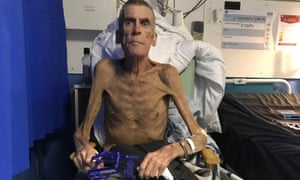
DWP horror in urging chronically ill man to work

 Stephen Smith in hospital

Stephen Smith had his employment support allowance stopped despite weighing only six stone and being in constant pain. 

Sunday, 7 October 2018

Peace News, Free Speech & 'Hate Speech'

by Brian Bamford

PEACE NEWS has been continuing its splendid coverage of the controversial transgender issue and its impact on free expression since the beginning of this year; the latest edition carries a thoughtful comment piece from the Manchester peace campaigner Cath Bann and a letter from the biologist Les May.  Northern Voices particularly applauds its editorial stand on free speech.


Both Cath Bann and Les May are responding to a letter in the previous edition of Peace News from Clare Bonetree who claimed that the paper was confusing free speech with 'hate speech'.

Cath Bann writes:  'So few left-wing publications have been courageous enough to print opinions which question the prevailing thought on trans issues, and the fact that you have featured articles from both sides of the divide, as well as offering your own take (as a free speech issue) is commendable.'

Les May in his letter writes:   'Increasingly we have people trying to grab the moral high ground by claiming that something they read or hear, and do not like, is racist, anti-semitic, Islamophobic, misogynistic, transphobic, homophobic, patriarchal or in the latest catch all phrase, "hate speech", and should not be said.'

Ms. Bann in her comment piece argues:   'While I appreciate that Clare’s motivations likely stem from the desire (which I and presumably all in the peace movement share) to stand up for minority communities, I believe there is a failure to see that there is an overreach in trans rights ideology that is causing genuine concern.  To label this concern, and Peace News’ article, as transphobic is drawing the parameters of what counts as transphobia too widely.'

This topical broad brush approach employed by Ms. Bonetree and much of the anglo-saxon left is both lazy and dangerous.  As Les May is well aware that in Rochdale and elsewhere in the North it has led to a kind of inverted racism in which tend to turn a blind eye to ethnic grooming gangs or more recently cases of multiple voting by people of Asian ethnicity which the authorities seem reluctant to investigate for fear of being accused of 'institutional racism'.

Peace News in their current editorial commenting on the ongoing disputes surrounding both transgender and free speech declare:

'Last issue, we published a letter from Clare Bonetree explaining why she was ending her subscription to PN over our coverage of recent conflicts over trans rights.  The last straw for her was our description of the conflict at the Liverpool Anarchist Bookfair (over an anti-trans leaflet) as a question of free speech. Clare’s letter prompted a response from another reader, Cath Bann, which is published below.  We welcome responses to both Cath’s and Clare’s letters – we want to represent the diversity of views in grassroots movements for change, and be a forum for debate.'

It's refreshing to see a publication like Peace News that is encouraging intelligent debate on these issues.

************

Saturday, 6 October 2018

Banker's Bargain Booze at Labour Conference

THE current issue of Private Eye reports that 'For all the talk of socialism at the Labour Conference in Liverpool, some bankers were still on hand to spread largesse:  the New Statesmen's invitation-only reception was sponsored by Nat West-a subsidary of state-owned Royal Bank of Scotland.'

According to The Eye though RBS was nationalised and bailed out by the public it 'continued to act like a bad private bank paying big bonuses at the top and squeezing small business.'   But at the Liverpool Labour Party Conference it dished-up the drinks for the party members at a party held at the  bar with a Guevara-chic theme catering in a 'pretend revolutionary cocktail bar?'  

Meanwhile, Shadow City Minister Jonathan Reynolds also enjoyed a private party with the bankers at the conference.  The Eye says:  'He was star guest at the invitation-only Lansons Financial Reception, also held in the REVOLUCIÓN DE CUBA BAR.'   Lansons is a lobbying firm which specialises in city clients, which The Eye claims represents 'overshore financial centres and tax havens like Jersey.'
*******

Thursday, 12 July 2018

Anarchy in Action?

by Chris Draper
ANARCHIST Bookfairs once demonstrated ‘Anarchy in Action’ – intellectually stimulating, friendly and welcoming to all-comers.  Now “Anarchist Bookfairs” routinely exemplify prejudice, bans, ejections and violence. First the London Bookfair was cancelled now Sheffield’s gone the same way. Manchester lost its prestigious “People’s History Museum” venue because of the blacklisting behaviour of its organisers and the 2018 Liverpool Bookfair first banned one anarchist and then physically ejected another. In an attempt to restore open-minds and open-access I recently emailed one of the ‘Liverpool Anarchist Bookfair’ organisers and I invite YOU dear reader to evaluate the response for yourself...
(a copy of the email sent by me to Maria, one of the Liverpool Anarchist Bookfair organisers)
*******
Dear Maria,
I email you as one of the organisers of the recent Liverpool Anarchist Bookfair.

Whilst I appreciate that organising such an event is a thankless task you would probably agree that several aspects of what transpired were rather negative. As an aged, lifelong anarchist who devoutly believes ‘The Personal is Political’ it is almost anathema to me to ban people from anarchist events. We should practice what we preach and live the society we advocate. Would we ban people from a post-revolution anarchist world?

Three people were to some extent subject to bans; Barry Woodling, Brian Bamford and another unnamed male. Whilst Woodling was almost immediately reinstated, Bamford was left outside in the rain and the third character was ejected late in the day. In none of these three cases was any open, democratic, ‘due-process’ evident. The Woodling example underlines the quixotic nature of such bans as he had previously been refused entry to the Manchester fair and was informed on arriving at Liverpool he was again banned and then for no apparent reason this decision was quashed and he was allowed in to no ill effect. You surely recognise that such conduct betrays an absence of justice and consistency. Anarchism should model improved relationships not exemplify irrational prejudice.

Moving on from the Woodling example, I realise that some comrades disagree with views expressed by the other two individuals, in fact in both cases I expressed my own criticisms to them personally, BUT one of the defining aspects of anarchism is that we relish disagreement and win over critics by exemplary argument and behaviour rather than repression and exclusion. Of course, we have a right to physically defend ourselves but where is the evidence that any of these three individuals had to be excluded to prevent them physically attacking anyone? I can only presume Mr Bamford was banned on the basis of prejudicial testimony as the objective account of a violent attack upon him at a previous book-fair given by respected bookseller, Ross Bradshaw (and available on his own website), makes clear that Bamford was the victim. (Ironically I noted the presence of the perpetrator of that particular violent act inside the Liverpool fair).

I appreciate your efforts in organising the bookfair, of which many aspects were admirable, but I don’t think such injustice should be brushed aside and then repeated next year (you have doubtless seen the negative publicity in Peace News etc). I don’t claim to have all the answers but I would ask you and the other organisers to constructively address this problem and would be happy to correspond about possible solutions.

For Peace, Love & Anarchy
Christopher Draper
********************************************************************************
Dear Christopher,

Thanks for your email, which Maria has forwarded to the rest of us.  We are happy to clarify that there was no ban on Barry Woodling attending.  We are not sure who told him to leave, but one of us
stepped in to say that he did not have to leave.  We did not discuss him or communicate with him prior to the bookfair because there simply was no reason to, and most of us did not even know of him.
We emailed Brian Bamford in advance of our bookfair as follows, after some correspondence with him:

"Dear Brian,
We appreciate that blacklisting is an important issue to you, and we
wish you all the best in your own campaigning efforts against it.

However, unfortunately we have to ask you to not attend the Liverpool
Anarchist Bookfair. It has come to our attention that that there is a
history of disruption and conflict associated with yourself at
bookfairs and other occasions elsewhere, so we have decided that in
the interests of all concerned - including yourself - and the smooth
and peaceful running of our event, it is best that you do not attend.
Thank you in advance for respecting this. Our decision is final."
Therefore when Brian arrived, we peacefully but firmly insisted that
he leave, in accordance with our prior decision. Brian chose to stay
outside the venue to talk to people coming into the building, rather
than to do something else elswhere; there were plenty of places he
could have gone to be much more comfortable and sheltered, such as a
cafe, pub, shop, or the cathedral or a museum for example.
The other person asked to leave during the bookfair was someone who
was distributing a transphobic leaflet, literature that expressed
prejudice against an oppressed group, against our safer spaces policy
https://liverpoolanarchistbookfair.wordpress.com/2018/03/22/safer-spaces/
. We asked him to step out of a workshop to talk with us, but he
refused and escalated the situation. This resulted in him being asked
to leave, and we escorted him out of the building with the support of
the venue staff. On the way out this person kicked someone hard in the
back from behind on a flight of stairs - very fortunately the person
they kicked was not seriously injured.
A one day event like the bookfair is not a situation where you can
hold some kind of in-depth process to resolve a conflict or address
harmful behaviour. As organisers we have a great many practical issues
to manage on the day to keep the event running smoothly. We expect
that the vast majority of people will behave in a reasonable and
respectful way towards others, but we have the right, and
responsibility, to ask anyone to leave if they do not. We took care to
think about and plan for dealing with possible problems and we
publicised the safer spaces policy, in advance online and in the
printed programmes on the day,  to make it clear what was not
acceptable.
Our decision to ask Brian in advance not to attend was not due to
disagreement with his views, and was not at the behest of anyone else,
but was informed by learning of various conflicts and difficulties
involving him, in particular his threats to sue one of the Manchester
bookfair venues, the People's History Museum, and his behaviour at the
Freedom Press Friends meeting in June 2016. Since the bookfair he has
emailed Maria making a threat to block trade union bodies from
supporting any future financial appeals by News From Nowhere bookshop,
where she works but which had absolutely no involvement itself in
organising the bookfair. This only confirms to us that Brian can be a
difficult person who is very focused on pursuing grudges.
It's very understandable why Brian and his friends like yourself feel
that he should be given some sort of hearing for his side of what
seems to be very complicated history of conflicts, but as Liverpool
event organisers we have no obligation or capacity to somehow attempt
to adjudicate on any past events and incidents that took place
elsewhere. We simply were not and are not interested in being drawn
into these conflicts, nor for our event to be used as an occasion to
pursue such conflicts.
best wishes
Liverpool Anarchist Bookfair collective
********

Sunday, 1 July 2018

'Fuck May 1968'.& Anthropological Illiteracy

by Brian Bamford
THE distinguished historian A.J.P. Taylor once wrote that he was a vain rather than ambitious historian. Radical historians, one would have thought would be vain rather than ambitious, yet my dealings with the radical historians recently suggests that they are both vain and ambitious. My review below reflects upon how the new wave radical historians may have become corrupted in their own studies to a degree in which they are now becoming part of the problem:
******
ACADEMIC righteousness prevails most among those of us to whom the truth is revealed.  So many PhD's doing papers on this and that, so many historians in receipt of grants and bursaries. Vernon Richards, the former editor of Freedom - 'the anarchist weekly', once called for exporting the PhD's.

Ian Gwinn, who was organising the event Liverpool on the 8th, June which was rather coyly entitled 'F*ck May 1968, Fight Now: Exploring the Uses of the Past from 1968 to Today', welcomed participants at the CASA Club. The first session was 'History is a Weapon' addressed by Christopher Garland on 'Circumnavigating the past, foreclosing the future: commemoration of the radical past in the amnesiac present'. The title of the event, I learnt, was based on a bit of graffiti from Athens in 2008.

In his book 'DEMANDING THE IMPOSSIBLE: A history of Anarchism', Peter Marshall talked of graffiti on the walls of Paris in 1968 declaring: 'NEITHER GODS NOR MASTERS; THE MORE YOU CONSUME THE LESS YOU LIVE; ALL POWER TO THE IMAGINATION; IT IS FORBIDDEN TO FORBID; BE REALISTIC DEMAND THE IMPOSSIBLE.'

Marshall claimed that unlike other French revolutions, which had been mainly concerned with overcoming economic scarcity, 'the French revolutionaries in a society of abundance [in 1968] were preoccupied with the transformation of everyday life.'

As General De Gaulle correctly noted, they were 'in revolt against modern society, against consumer society, against technological society, whether communist in the East or capitalist in the West'.
The then editor of The Times, William Rees Mogg, came to the same conclusions in his editorials at that time, and had supported the Rolling Stones, who according to Keith Richards, would have been destroyed at the height of their notoriety more than 40 years ago if The Times under William Rees Mogg had not not launched its famous attack on their jail sentences for drugs offences.'

The program for the Liverpool event quotes Walter Benjamin’s maxim that ‘nothing that has ever happened can be regarded as lost for history...’.  With in Spain the ‘Memoria Historico’ movement drawing on evidence from the Spanish Civil War that the families of victims of that war are still trying to recover.

Eric Azera from Barcelona talked about the recent threats to squatting in Catalonia and elsewhere. Tim Briedis addressed the 1994 National University occupations in Australia, and student radicalism which had developed beyond the 1960s.

Piotr Paszynski and Joaquin Armanet spoke on Jacques Ranciere’s concept of ‘Radical History and Proletarian Experience’. Jacques Ranciere was a student of the Marxist thinker Althusser, but clashed with his teacher over the events of May ’68. While Althusser and other Marxists were asserting the importance of Marxist academia in the French student revolts, Ranciere began to break away from this traditional mode of thought. Marxist intellectuals accused the revolts of being bourgeois and undisciplined. To which Ranciere accused Marxists of being a bunch of little shits.

From a criticism of Althusser and orthodox Marxism, Ranciere’s message soon became ‘Philosophy – it’s a big bag of dicks.’ Writing Hatred of Democracy, Ranciere attacks the Platonic tradition and ties it to practically every Marxist philosopher. He argues that everyone in the Western tradition, from Plato to Marx, wants to become a philosopher king to shovel Truth into the mouths of the blind ignorant masses. Ranciere carries this line of thought to his other books such as “Disagreement” where he accuses every theorists of democracy of being a Platonic saboteur.

Hannah Arendt in an essay entitled ‘Communicative Power’ wrote: ‘We have recently witnessed how it did not take more than a the relatively harmless, essentially nonviolent French students’ rebellion to reveal the vulnerability of the whole political system, which rapidly disintegrated before the astonished eyes of the young rebels…. they intended only only to challenge the ossified university system of government power, together with that of the huge party bureaucracies - ‘une sorte de desintergration de toutes les hierarchies”. It was a text-book case of a revolutionary situation.’

Roger Ball of the Bristol Radical History Group seems to be always trying to turn history into agitprop, and capture the headlines. His latest offering is based on an old theme: Unseating the local influence of the Society of Merchant Venturers and pointing to their trade in slavery: ‘Kick over the statues: using history as a weapon’. More recently their efforts have led to a ‘Countering Colston campaign’ in Bristol, which in turn has inevitably resulted in a doctoral paper ‘IS IT WRONG TO TOPPLE STATUES & RENAME SCHOOLS?’ by - Dr. Joanna Burch-Brown* Perhaps radical history has now itself become an industry from which various academic hangers-on are now profiting: even my friend Roger Ball a pioneer of radical history has now been anointed Dr. Roger Ball, and is currently employed as a Research Fellow at Sussex University.

Kerrie McGiveron discussed the part played by the New Left and the rise of Big Flame in the early 1970s, with particular reference to the Kirby Rent Strike (1972-73). She gave an ethographic account of the Rent Strike with the help of a film documentary produced by Nicholas Broomfield. At one point in the film a woman interviewee between puffs on her cigarette in the setting of what appeared to be her front-room, said:
You can take your film, but the position of the working class won’t change’
To which the interviewer responded: ‘Why do you think I’m making this?’
She then said: ‘Just for your personal satisfaction!’

Ms. McGiveron, when questioned about this exchange in which it was suggested that the woman was displaying ‘apathy’ and a claim to ‘privacy’, claimed to have background information in which it was suggested that the interviewee was a member of a far-left party and was in fact very active. Ms. McGiveron had already made clear she was conscious of the dangers of post-facto rationalisation in doing this research. So can we take this special claim to background knowledge seriously?

Terry Wragg of Leeds Animation Workshop showed an animated film which was designed to portrayed male sexism. What began with building site banter, randy pestering and innuendo, concluding with more full-on approaches of the #Me Too variety. What was important here about the animated film was that a picture of reality is much more powerful than saying something; that’s why a docu-drama film like ‘Three Girls’ about the grooming scandal in Rochdale was so effective. But while one can do a feminist-take on predatory men in a social context, it would be just as anthropologically appropriate to do an animated film on ‘Pancake Tuesday’ and the initiation ceremonies, the ritual ‘de-bagging's’ and ‘ball greasing’ of apprentices, that were indulged in widely in the factories and mills in the North of England by both working-men and women in the last two
centuries. But when we talk about radical history in this context we are really, I suspect, joining the bandwagon of the fashionable addicts and the politically correct crowd.

The case of Geoff Brown who took part in the Round-table discussion ‘Remembering 1968 & After’ is significant in this respect. Geoff claims he is ‘active as a historian of Manchester “from below” ’, a softly-spoken Southerner and someone who moved up North in 1972. The jury must still be out over his claim to be a historian ‘working from below’. His publication record as presented in the program for the Liverpool event is rather sparse, he has written something for International Socialism entitled ‘John Tocher and the limits of commitment’ for the North West History Journal (2017/2018); ‘Il Principe, a handbook for career-makers in further education’ and ‘Pakistan, failing state or neoliberalism in crisis’ in International Socialism.

What we are getting here in the sphere of the fad for radical history is something like what Proust showed us in Sodome et Gomorrhe, and what Wyndham Lewis described in ‘The Art of Being Ruled’ as ‘an analysis of the powerful instinctive freemasonery of the pederast’. Dr. Ball wants us to kick over the statues to cleanse the architecture of Bristol and beyond of former historical adventurers, Penguin Random House want to diversify to the nth degree to take care of talented minorities such as the trans community this year, and, who knows, perhaps the necrophiliacs next year.

* Lecturer in Philosophy at the University of Bristol.

Friday, 1 June 2018

Peace News on the Liverpool Anarchist Bookfair

Anarchists barred from bookfair

One person barred and a second ejected from Liverpool event.

Septuagenarian Anarchist - Brian Bamford

ON 7 April, the organisers of the Liverpool Anarchist Bookfair excluded two people from the gathering, which was taking place in the huge Black-E community arts centre near the city centre.

Brian Bamford, a member of the Northern Anarchist Network, was told in advance that he would not be allowed in, and was stopped at the door.  Another man (whose name is not known) was taken from a workshop by organisers and thrown out of the bookfair. (The workshop was about employers barring trade unionists from jobs.)

I was told by bookfair organisers that Bamford had a history of causing disturbances, and they were determined to avoid such problems at their event.  The other man was apparently thrown out for circulating an offensive anti-trans leaflet.

Read more:

https://peacenews.info/node/9046/anarchists-barred-bookfair