Showing posts with label Carles Puigdemont. Show all posts

Monday, 29 April 2019

Broken Politics on the Iberian Penisular

 by Brian Bamford
BROKEN-up politics has characterised Spain since the successful rise of Podemos and the Citizen's Ciudadanos party in the 2015 election.  After that the two-party system was over.  Now with the far right VOX party gaining 24 seats in yesterday's elections there is a real fragmentation in political life which mirrors events elsewhere in Europe.


This election came less than a year after Spain’s then prime minister, Mariano Rajoy, was defeated in a vote of no confidence owing to corruption in his Popular Party.  The leader of the socialist party (PSOE), Pedro Sanchez, then formed a minority government with the help of the Catalan separatists, leading his critics to accuse him of being too friendly with the independentistas.  
  
However, Sanchez was unable to hold this informal coalition together and last February he called a snap general election when he was unable to get a national budget through the Cortes parliament when the Catalan nationalists witheld their support owing to the problems over Catalan independence.

The issues of independence, identity and Spanish unity flavoured the election.  And yet, the most significant consequence of these elections was the fragmentation of the right and the centre right.  The most damaged party in these elections has been the conservative Popular Party, which has lost votes to both the far Right VOX and the more centrist Ciudadanos Citizen's party.


  Catalan Independence

The Catalan independence conflict originally came to a crisis in October 2017 when the Catalan separatists held an unconstitutional independence referendum, which drew 40% of eligible voters but saw a 90% vote to secede.  Three weeks later, Carles Puigdemont, the region’s president at the time, declared independence — leading to Spain’s deepest constitutional crisis since its return to democracy.

As a result, the Spanish government, then led by the Popular Party, fired the Catalan parliament, wrested control of the region, began arresting the movement’s leaders and called for fresh regional elections.

While separatists criticized the government for cracking down, some on the right argued the Popular Party was too soft on the independentistas.

Fragmentation of the Right

Consequently some Popular Party voters turned to VOX, which seeks to suppress regional autonomy in Catalonia.  A xenophobic party VOX echoes Franco’s nationalist rhetoric and follows the populist trend seen in recent years across Europe, stoking fear of immigrants and demonizing feminists.

On the other hand some other former Partido Popular voters seem to have drifted towards the centrist Citizen's Ciudadanos party.

The Catalan crisis and the rise of Vox have changed the debate in Spanish politics.
'This is not an election about the economy - a different situation from what we have seen in more than 20 years,' says Juan Rodríguez Teruel, professor of political science at the University of Valencia.

Despite widespread concerns about unemployment - which remains high in Spain compared with its European neighbours - it barely featured during the campaign and was raised during the debates only briefly

But Prof Teruel warns that the surge for Vox is coming at the expense of other right-leaning parties - the PP or Ciudadanos. And for the first time since the 1970s, the right is 'very fragmented' - something that could benefit opponents on the left.

'The main reason now to vote for the left-wing electorate is to avoid the potential coalition among right-wing parties,' Prof Teruel says. 
 
Ciudadanos, meanwhile, could feasibly support a coalition with the Socialists, despite publicly dismissing the idea.

'I'm not sure they could keep this position if the numbers give the potential of a coalition,' Prof Teruel says.

'The pressure on Ciudadanos will be very, very high.'

*********


Wednesday, 21 March 2018

Catalonia: Release all political prisoners immediately!

FOR the last four months, repression has been unleashed in Catalonia. 
 
Jordi Cuixart and Jordi Sanchez, officials of democratic associations, were thrown in jail more than three months ago; Oriol Junqueras, who was nevertheless elected as a member of the autonomous Parliament on 21 December, is still being detained.

The deposed President and three other ministerial advisers of his government are still in exile in Brussels, under threat of being thrown in jail if they set foot on Spanish soil; hundreds of mayors, teachers, other workers and activists have been summoned to court and charged with rebellion and sedition, in other words charged with organising a violent uprising against the Spanish State. Catalan autonomy has been suspended under Article 155 of the Spanish Constitution, and it is Rajoy who is governing, from Madrid with his ministers.

What is their “crime”? The Spanish monarchy and its government are punishing them for organising the vote through which the Catalan people freely declared themselves in favour of the Catalan Republic on 1 October 2017.

This brutal repression by the Rajoy government and the monarchy, which began with the huge police violence against people who were voting on 1 October, has the unconditional support of the European Commission, the governments of the leading countries of the European Union (Macron, Merkel, May, etc.), as well as the Trump administration.

On 28 January, the monarchy, the government and – following their diktats – the Constitutional Court went a step further in restricting rights, in violation of their own laws and legal precedents, by forbidding the majority of the autonomous Parliament elected on 21 October to appoint the President of their choice, in the person of Carles Puigdemont.

We are activists of all political tendencies of the democratic and labour movement from the Spanish State and all over Europe. Together with all the workers of Europe, we have seen the vast majority of the Catalan people peacefully and courageously mobilise for the Republic, and we have seen the State respond with police brutality, legal prosecutions and the suppression of their rights. We cannot remain impassive! We unconditionally stand shoulder-to-shoulder with the Catalan people for their rights to be respected!
We defend their right to freely decide their own future, to rid themselves of the monarchy and the institutions of the 1978 Constitution, which guarantee the continuity of Francoism.

We defend their right to constitute their own Republic, just as we defend the right of all the peoples of the Spanish State to constitute their own Republics and – if they so wish – to freely form their own union of Republics.
We, activists of the labour and democratic movement from the Spanish State and throughout Europe, call for united action throughout Europe for the following:

Release all the political prisoners immediately!

Cancel all the legal prosecutions!

Freedom for the Catalan people to choose their own representatives!

Hands off the Catalan Republic!


First endorsers


BELARUS
Youri Glouchakov,  « Razam » Social Movement

BRITAIN
Mike Arnott, Secretary Dundee Trades Council - personal capacity  ; Mike Calvert, Deputy Secretary Islington Unison - personal capacity  ; Jane Doolan, Secretary Islington Unison, Unison NEC - personal capacity   ;  Paul Filby, Secretary Merseyside Trades Council - personal capacity  ; Steve Hedley, RMT Assistant General Secretary - personal capacity  ; John Hendy, QC - personal capacity  ; Ian Hodson, National President BFAWU - personal capacity  , Michael Loughlin, Christ Church University Canterbury - personal capacity   ; Henry Mott, UNITE Southwark - personal capacity  ; Nick Phillips, UNITE - personal capacity  ; Nat Queen, University of Birmingham, UCU - personal capacity  ; John Sweeney, trade unionist - personal capacity  

BELGIUM
Salah Azaam, trade unionist  ; Toni Bernardi, Retired Metalworker ; Michèle Corin, SP activist Verviers ; Gaëtan Coucke, trade unionist education ; Sarah De Laet, teacher , trade union representative ; Roberto Giarrocco, trade union representative Public services ; José Hardy, trade union representative Public Service Governmental sector ; Serge Monsieur, president CGSP ALR Vivaqua (pers cap ) ; Laura Moraga Moral, Teacher trade unionist ; Jan Smidt, labour activist ; Claire Thomas, Teacher trade union representative CGSP .

CZECH REPUBLIC
Petr Schnur, CMF, České mírové fórum (Czech Peace Forum)

FRANCE
Gilles Barthes, psychiatrist (76) ; Jean-Michel Boulmé, POID activist (01) ; Cécile Brandely, lawyer , member Lawyers of France trade union (31) ; Oscar Caballero-Ramirez, trade unionist metal industry (17) ; Patricia Cestor, trade unionist national education (92) ; Jacques Châtillon, freethinker (22) ; Katel Corduant, trade unionist (75) ; Christian Delannoy, General Practitioner (59) ; Jean-Michel Delaye, trade unionist , town councillor Brumath (67) ; Laurent Denil (95) ; Claire Dujardin, lawyer , member Lawyers of France trade union (31) ; Stephen Duval, lawyer (69) ; Patrick Farbiaz, Social ecology (75) ; Dominique Ferré, contributor to La Tribune des travailleurs (94) ; Jean-Christophe Giraud, lawyer (69) ; Daniel Gluckstein, POID National Secretary ,International Workers Committee ( IWC ) co-coordinator (93) ; Basile Gonzales, child psychiatrist (76) ; Thomas Gonzales, lawyer (34) ; Nicolas Griffon, General Practitioner (76) ; Pierre Herranz, retiree labour activist , (17) ; Michèle Kauffer, trade unionist (91) ; Christel Keiser, town councillor , POID National Secretary (93) ; Marc Lagier, clinician (37) ; Francis Lopera, trade unionist ArcelorMittal (57) ; Maria José Malheiros, trade unionist (75) ; Alexia Muller, trade unionist (75) ; François Préneau, retiree, trade unionist , member of Ensemble (44) ; Grégoire Privolt, teacher trade unionist (69) ; Jean Pierre Richaudeau, Initiative pour le socialisme ( Initiative for socialism ) (74) ; Paul Robel, General Practitioner (56) ; Olivier Roux, teacher trade unionist (2A) ; Gérard Schivardi, Mayor of Mailhac (11) ; Arsène Schmitt, border zone trade unionist (57) ; Robert Schmitz, trade unionist (75) ; Henri Sick, trade unionist (75) ; Sarah Taconet, General Practitioner (95) ; Marinette Veyssière, trade unionist (79) ; Katia Vidal, trade unionist (66).

Germany
Sidonie Kellerer, trade unionist GEW ; Peter Kreutler, vice-president Düsseldorf SPD Workers Commission (AfA), trade unionist ver.di, trade union representatives committee ; Norbert Müller, SPD, trade unionist ver.di; Peter Saalmüller, SPD, trade unionist ver.di; Heimgard Schüller, trade unionist IG BAU;
Klaus Schüller, SPD Workers Commission (AfA) NEC , trade unionist EVG, Member of the International Workers Committee follow up Committee (IWC ) ; Anna Helena Schuster, shop steward ver.di ; Heinz Werner Schuster, Chair Düsseldorf SPD Workers Commission (AfA), ver.di representative

GREECE
Dimitrios Balaskas, agricultural worker , Nafplio ; Andreas Guhl, editor “Ergatika Nea”, LAE Argolide member  ; Maryse Le Lohé, LAE Papagos-Cholargos member Athens ; Sotiria Lioni, Nafplio ; Eleni Pierropoulou, member Popular Unity (LAE), Papagos-Cholargos, Athens.

HUNGARY
Tamàs Krausz, historian (pers cap ) ; Tamàs Gàspàr Miklos, philosopher, visiting professor, Central European University, Budapest, pers cap ; Judit Morva, activist, Le Monde Diplomatique Hungarian edition (pers cap ) ; Judit Somi, labour activist , contributor to Munkàs Hirlap

IRELAND
Ciaran Campbell, Mandate Trade Union - personal capacity  ; John Douglas, Mandate General Secretary - personal capacity  ; Brian Forbes, Mandate Trade Union - personal capacity  .

ITALY
Bruno Boggio, retiree, political activist ; Luigi Brandellero, worker , Tribuna Libera Editorial board ; Alessandra Cigna, teacher , trade union activist  ; Ugo Croce, self employed , Political Movement for the Repeal  ; Luis Cabases, journalist ; Felice Fazzolari, teacher , Political Movement for the Repeal; Kristian Goglio, teacher , trade unionist  ; Dario Granaglia, worker , trade unionist  ; Monica Grilli, teacher , trade union representative ; Gianni Guglieri, worker , trade unionist  ; Antonio Landro, teacher , trade unionist ; Aldo Mangano, student  ; Andrea Monasterolo, worker , trade unionist  ; Maria Jesus Lopez Montalban, Chair « Amics de Catalunya a Italia » Association  ; Alberto Pian, teacher trade union activist ; Betty Raineri, teacher , trade union activist ; Lorenzo Varaldo, Headmaster , Political Movement for the Repeal; Vanna Ventre, teacher , "Tribuna Libera" editorial board ;

PORTUGAL
Jorge Fonseca de Almeida, « economist ; Jaime Pereira, retiree ; Rui Rodrigues, University Professor ; José Júlio Santana Henriques, trade unionist, retiree ; Lia Santos, teacher e SPGL/CGTP ; Jorge Torres, Saica workers commission , CITE/CGTP trade union rep ; Adriano Zilhão, economist.

ROMANIA
Contantin Cretan, former political prisoner jailed because of his trade union activity.

RUSSIA
Mark Vassilev, historian.

SERBIA
Jaćim Milunović, labour activist .

SPANISH STATE
Miguel Angel Aragoneses Garcia, representative LAB trade union committee (Euzkadi-Basque Country ) ; Lurdes Barba, theater director (Catalonia) ; Patxi Fernández Álvarez, retiree, UGT trade unionist (Euzkadi- Basque Country) ; Eduard Gonzalo, pro-independence militant (Catalonia) ; Jordi Rabella Foz (Catalonia); José Luis Vinatea, deliverer , UGT trade unionist (Euzkadi- Basque Country) ; Felipe Zorita, retired rail worker , UGT trade unionist (Euzkadi- Basque Country)

SWITZERLAND
Michel Zimmermann, Member Geneva Socialist Party , Town Councillor Versoix ; Dogan Fennibay, trade unionist UNIA.

TURKEY
Yasar Avci, Retired Workers Union; Sevim Kacmaz, precarious labour  ; IKP member  ; Sadi Ozansü, Chair Workers Fraternity Party (IKP) ; Furkan Safak, IKP member  ; Birsen Yesilkanat, Health Workers Union .

Monday, 13 November 2017

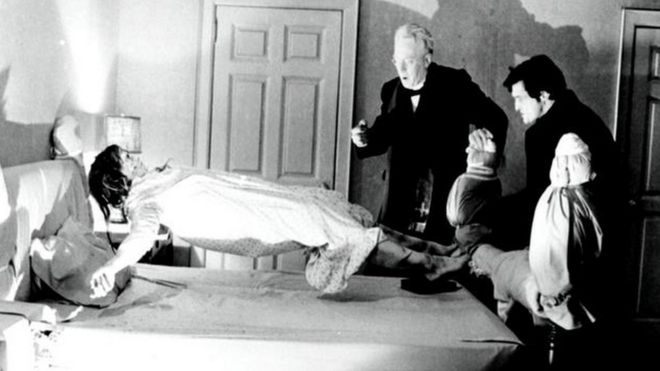
Catalan Leader to Exorcist Tune

still from The Exorcist in which a girl is levitating as two men watch, looking shocked
THE Spanish state broadcaster has been asked to explain why it ran the theme music to the 1973 horror film The Exorcist under a clip of the ousted Catalan leader Carles Puigdemont.
The theme is taken from Mike Oldfield's composition Tubular Bells.
It was played under Mr Puigdemont's voice in RTVE's flagship current affairs programme Informe Semanal last Saturday.
RTVE's own professional standards council said this was bad practice.
It started an investigation to find out who was responsible.
Informe Semanal - the title is Spanish for Weekly Report - has been running for 43 years on national television.
Last week it focused on the Catalan crisis. At about four and a half minutes in to the programme, Mr Puigdemont's clip came on, edited with Tubular Bells underneath.
Mr Puigdemont was saying that he and others were aware they might go to jail but would fight extradition.

Since the last government of Catalonia held a banned vote and declared the region independent, Spain's government has imposed direct rule, sacked the government, detained some Catalan leaders and called a snap election.

Sunday, 5 November 2017

Reasons for the Catalan Crisis

'The elections in February [19]36 was celebrated with [the former Catalan President, Lluís] Companys* and his [Catalan] government [still] in prison, later what followed was the proclamation of the Catalan republic inside the federal Spanish republic.  Then with the victory of the Popular Front [parties] came amnesty [for Companys and the other Catalan politicians].  How it is that history repeats itself, unfortunately with other parameters, but without gun shots, physical violence, and despite the social break (the catalan society is divided in two parts)" '
Carlos Beltran:  former representative in the Madrid CGT / CNT 

GERALD Brenan, the anthropologist and historian (who lived in Spain from 1919 until his death in 1987), in his book 'The Spanish Labyrinth' (1962) wrote:
'Both linguistically and culturally Catalonia was originally an extension of the south of France rather than a part of Spain and, under the rich merchant class which ruled it during the Middle Ages, it acquired an active, enterprising character and a European outlook very different from that of its semi-pastoral neighbours on the interior plateaux.'

More recently in 2006, after lengthy negotiations a Socialist PSOE government had agreed a Statute of Autonomy of Catalonia that devolved further powers to the Catalan region in 2006.

This statute was put to a vote in the Spanish and Catalan parliaments and it was endorsed in a referendum in Catalonia.  At that stage, support for Catalan independence stood at just 14 percent. The conservative People’s Party (PP), then in opposition, promised to reverse the statute unilaterally and took the issue to the Constitutional Court. In 2010, the court struck down a large part of the statute.  The response in Barcelona was a huge demonstration of more than a million people under the slogan  'We are a nation. We decide.'

The following year, Rajoy’s PP won an outright majority in the general election.

As a consequence, the Catalan government and its supporters were annoyed and attempted to negotiate with Rajoy about what should happen next.  Rajoy refused to engage.  The results were to drive up support for independence, increased success for separatist parties in regional elections, the first of a series of attempts to hold a referendum on independence, and the replacement of the Catalan government’s centrist leader Artur Mas by the more radical Carles Puigdemont.  Thus it was Rajoy and his refusal to negotiate that almost single-handedly brought about the election of a majority-separatist government in Catalonia in 2016.

Meanwhile, a Madrid judge has jailed eight MPs involved in the Catalan government that had declared independence.   


Now with television channels showing images of police vans with flashing blue lights said to be taking the former ministers to different prisons, Catalans took to the streets in anger and disbelief.
There were protests in front of the Catalan parliament in Barcelona, the regional capital, with police estimating a crowd of 20,000.  Others gathered outside town halls across the region including 8,000 people in both Girona and Tarragona.

Marta Rovira, a lawyer and Catalan separatist lawmaker, briefly broke down in tears as she spoke to reporters in Madrid after the announcement of the detentions.
'The Spanish state is a failed state, a state that has failed democratically," she said. "I'm convinced we won't surrender, we won't, we will fight until the end.'

Carles Puigdemont, the fugitive former president of Catalonia, on Sunday handed himself over to Belgian police before a European arrest warrant invoked by a Spanish judge triggered his capture and detention.

Today, the Belgian vice-premier and interior minister stated that Madrid had overreacted and all efforts must be made to ensure that Mr Puigdemont and his colleagues get a fair trial if he is returned to Spain. Jan Jambon, who criticised the “silence” of the European Union on the issue, said:  'I am just questioning how a European Union member state can go this far and I am asking myself whether Europe is to have an opinion on this.'

*   Lluís Companys i Jover (Catalan pronunciation: [ʎuˈis kumˈpaɲs]; 21 June 1882 – 15 October 1940) was a leftist politician. He was the President of Catalonia (Spain), from 1934 and during the Spanish Civil War.
He was a lawyer and leader of the Republican Left of Catalonia (ERC) political party. Exiled after the war, he was captured and handed over by the Nazi secret police, the Gestapo, to the Spanish State of Francisco Franco, who had him executed by firing squad in 1940. Companys is the only incumbent democratically elected president in European history to have been executed.[3][4] [5]
*******

Tuesday, 10 October 2017

Puigdemont's Catalonia statement in 15 sentences

from La Vanguardia
, Barcelona
The President of the [Catalan] Generalitat, Carles Puigdemont , appeared on Tuesday October 10 before the plenary of the Parliament and at his own request to report the results of the referendum on independence on 1 October .
The speech has been studied to the last detail in the last hours and has been controversial until the last moment in a meeting that have maintained the parliamentary groups of Junts pel Yes and the CUP and that has caused that the president Puigdemont requested the delay one hour from the beginning of the session.
Finally, at 19.00 in the afternoon and before all the deputies of the Parliament and more than 1,000 journalists, Puigdemont has assumed the mandate to turn Catalonia into an independent State in the form of a republic while at the same time asking the House to suspend the application of the DUI to open a process of dialogue.
'I assume the mandate of the people that Catalunya will become an independent state in the form of a republic '
'The Government and myself propose to the Parliament to suspend the effects of the declaration of independence to establish a process of dialogue '
'What I expose today is not a personal opinion, derives from the results of 1-O '
'The 1-O Catalunya held a referendum on self-determination in extreme conditions, amidst attacks on people who queued to introduce their ballot '
'The images of 1-O will remain in our memory forever, we will never forget it '
'We must all take our responsibility to de-escalate the situation. I will not contribute with the word or with the gesture to increase it '
'The votes favorable to the Estatut were 145,000 less than that obtained the yes to the independence the past 1-O '
'Millions of citizens have come to the rational conclusion that the only way to guarantee coexistence is for Catalonia to become a '
'From the point of view of self-government the last seven years have been the worst of the last four decades. There has been a lamination of skills and a shocking contempt against the language, culture and way of life in Catalonia '
'Catalan demands have always been expressed peacefully and from majorities obtained at the polls.'
'I ask for an effort to know and recognize what has brought us here. We are not criminals, we are not crazy, we are not abductees or coup. We are normal people who want to express themselves '
'We have nothing against Spain or against the Spaniards, on the contrary, we want to find ourselves better. To date the relationship does not work '
'Police repression and disqualification have been the response of the Spanish state to a peaceful demand '
'The polls have said yes to independence and this is the way that I am willing to go .'
There is a plea for dialogue that crosses all Europe, which already feels called '

Monday, 2 October 2017

Catalan break with Spain

CATALAN Premier Carles Puigdemont announced late on Sunday that his government would push ahead with a declaration of independence in the region in the coming days, after preliminary figures showed that some 90% of voters had cast their ballots in favor of secession from Spain.
Preliminary figures showed some 90% of voters in the region had cast their ballots in favor of independence.  However, participation was just 2,262,424 of a total voter pool of 5,343,358, for a turnout rate of 42%, according to the Catalan government’s own figures.  The abstention rate was 58%.
Puigdemont said his government would “in the next few days” present the results of the ballot to the regional parliament “so that it can act in accordance with the referendum laws.”
******